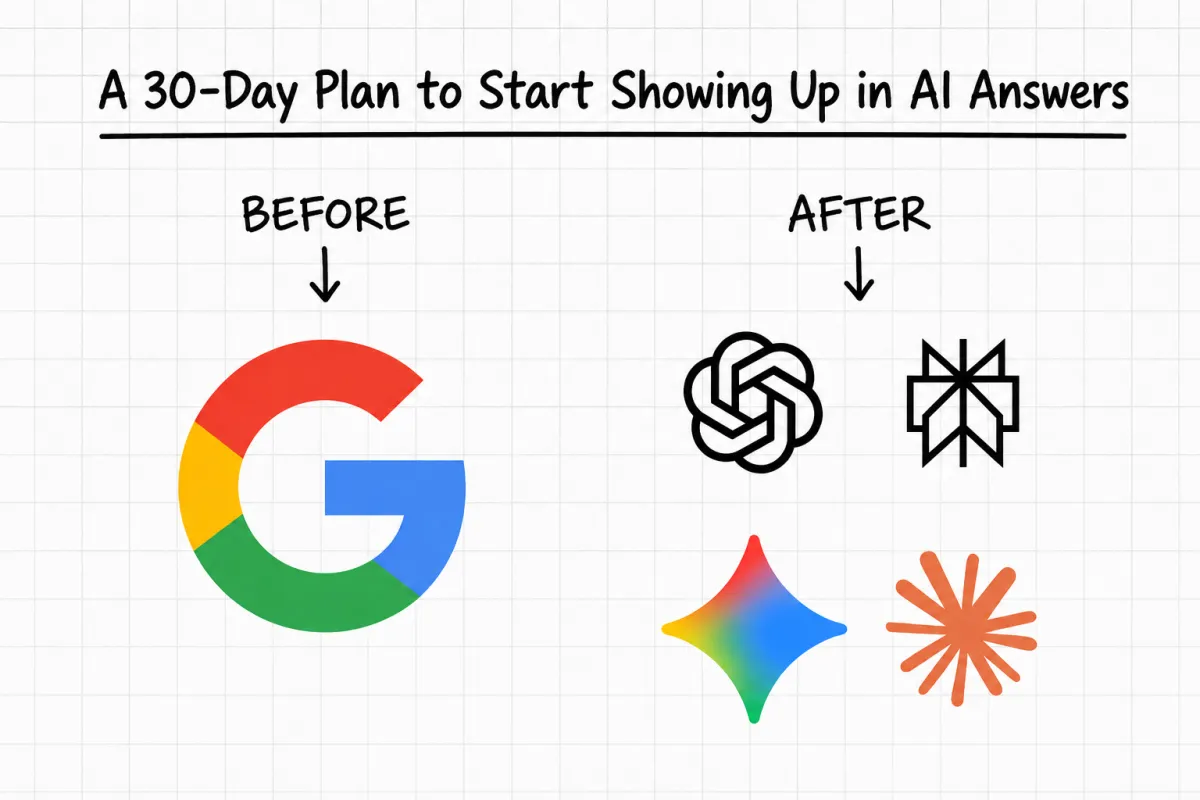
30-Day Plan to Start Showing Up in AI Answers
Key Findings
Strong Google rankings do not guarantee that a physician or clinic will appear in ChatGPT, Gemini, Perplexity, Copilot, or Google AI answers.
The first step is to test 30–50 real patient prompts and establish a baseline for mentions, citations, competitors, sentiment, and answer accuracy.
AI platforms need clear information about who the physician is, what they specialize in, where they practice, and why patients should trust them.
Answer-ready content should address real patient questions directly, present the main answer early, and use clear headings, evidence, examples, and FAQs.
Third-party authority—including reviews, directories, publications, interviews, videos, and professional profiles—is essential for validating the clinic’s credibility.
The first 30 days build the foundation and identify early wins; AI visibility should then be measured and improved every month.
For years, most marketing teams judged search visibility by rankings, clicks, and traffic. That made sense when the path was simple. A person searched on Google, clicked a result, visited a website, and made a decision there.
That path has changed. AI tools like ChatGPT, Perplexity, Google AI Overviews, Gemini, and Copilot now answer questions directly. Users compare companies, learn about services, and narrow down their options before ever visiting a website. You can rank well on Google and still lose the sale. You can have better content than your competitors and still get left out of the AI answer. That's the reality of where search is heading, and most marketing teams are still measuring the wrong things.
The numbers make this hard to ignore. AI search traffic surged 527% year over year in 2025. ChatGPT alone has reached 900 million weekly active users as of February 2026, up from 400 million just 12 months earlier. Perplexity reported a 300% increase in query volume over the past year. And 94% of B2B buyers now use generative AI tools during their purchase process. The audience using AI to find, compare, and shortlist vendors is enormous and growing fast. The question is whether your brand is in the answers they're getting.
How AI Tools Actually Choose What to Cite
Understanding how AI platforms decide what to reference is the starting point for any visibility strategy. They don't pick sources at random. They look for content that helps them answer a question clearly and confidently - and the bar is higher than most brands realize.
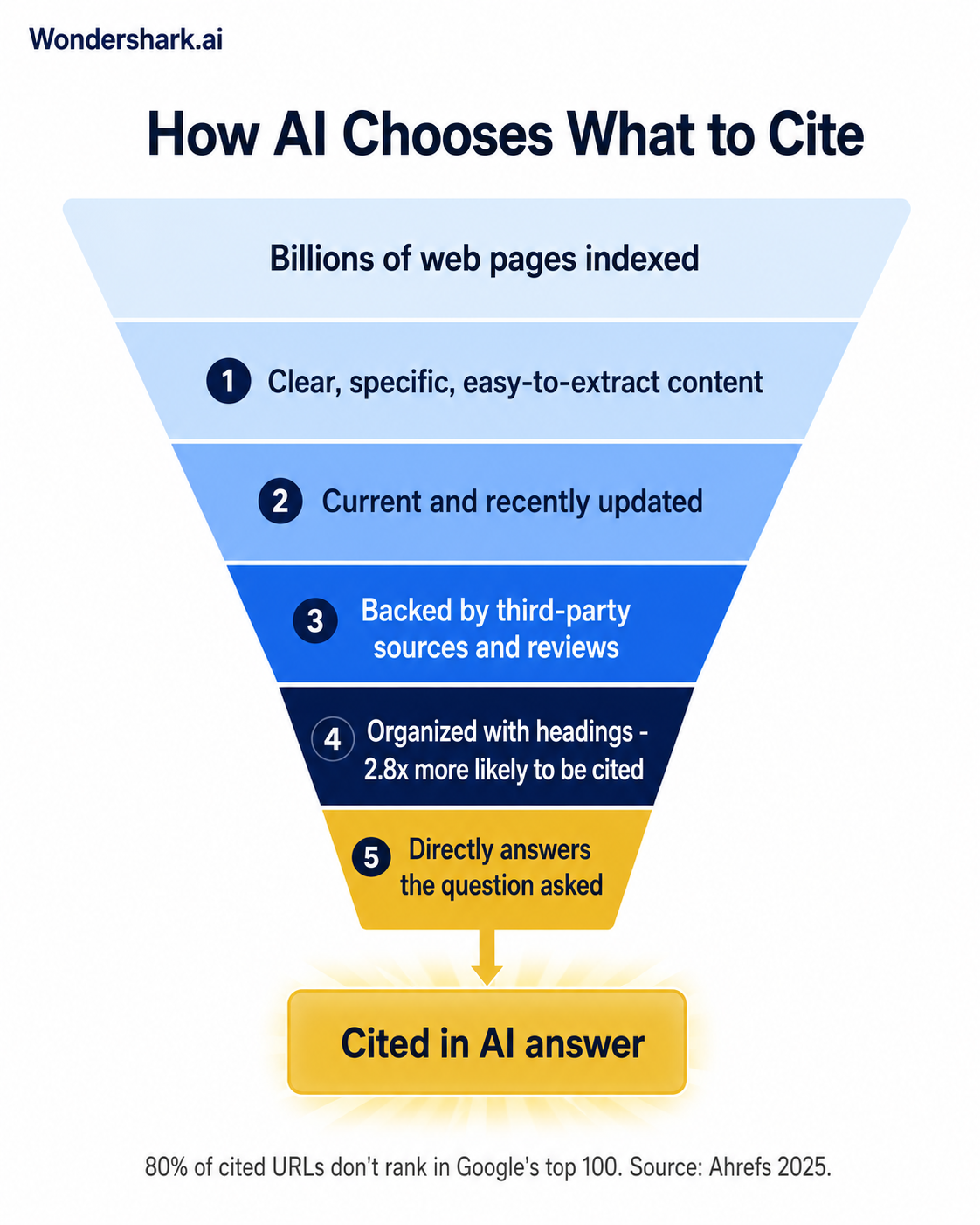
Each platform works differently, but the pattern is consistent. AI tools are more likely to cite content that is clear, specific, useful, current, and backed by reliable third-party sources. Technical quality matters too. Your website needs to explain your brand in plain, specific language - not just sound professional. A vague sentence like "We help businesses grow with innovative solutions" is essentially invisible to an AI trying to construct a precise answer.
A stronger version would be: "Wondershark helps businesses improve how often they appear, get cited, and get recommended inside AI-generated answers from tools like ChatGPT, Google AI Overviews, Perplexity, Gemini, and Copilot." That version explains the company, the service, the outcome, and the platforms involved. One tells the AI what you do. The other doesn't. 80% of cited URLs don't even rank in Google's top 100 for the original query - meaning strong AI visibility is not the same thing as strong SEO, and you can't assume one produces the other.
Your website should clearly answer seven questions: Who are you? What do you do? Who do you help? Where do you operate? What problems do you solve? Why should someone trust you? And what proof supports your claims? If a visitor can't find those answers quickly, AI tools likely can't find them either - and they'll use a competitor's site instead.
Rankings Don't Show the Full Picture Anymore
This is the part most marketing teams haven't fully reckoned with yet - and it's where a lot of good brands are quietly losing ground.
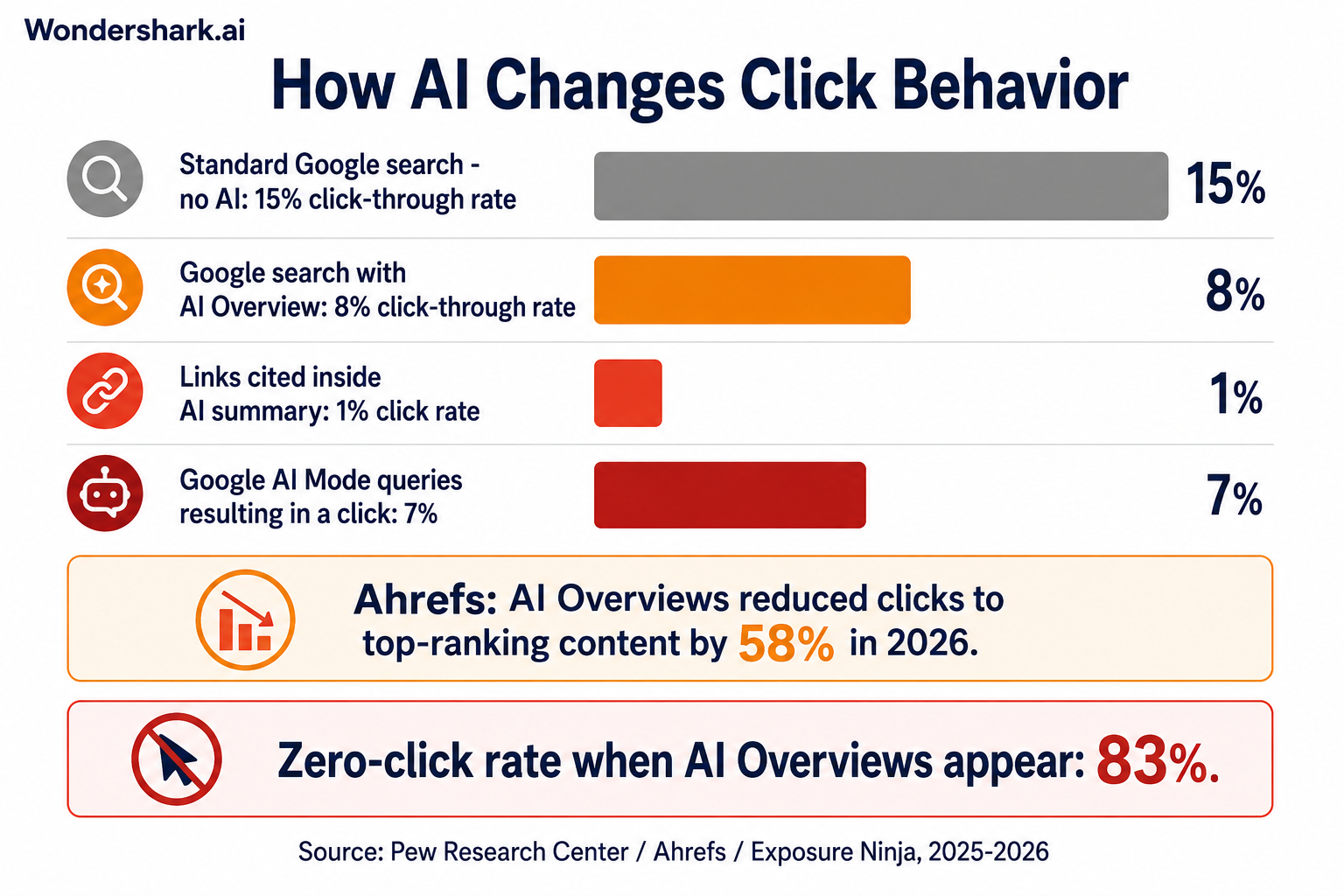
A page can rank in the top three on Google and still lose the buyer if the AI answer already gives them what they need. Pew Research Center found that when users saw a Google AI summary at the top of their results, they clicked a traditional search result only 8% of the time - roughly half the 15% click rate for searches without one. Only 1% of visits resulted in someone clicking a link cited inside the AI summary itself. A full quarter of users who saw an AI summary stopped searching entirely, satisfied with what the AI gave them.
Ahrefs measured what this means for top-ranking content. Its 2025 study found AI Overviews reduced clicks to top-ranking pages by 34.5%. Its 2026 update reported a 58% reduction. Zero-click searches hit a record 83% when AI Overviews appeared - meaning in the most AI-forward version of Google search, only 7% of queries end in a click to an external website. Google's AI Mode now processes over a billion queries a month. Getting cited inside the answer is the new ranking on page one.
The better question is no longer "Where do we rank?" It's "Are we part of the answer?" That means tracking brand mentions, citation frequency, competitor mentions inside AI responses, and how accurately AI tools describe your company. A local orthodontic clinic might rank well for "Invisalign near me" - but if someone asks ChatGPT "Who is the best Invisalign provider near [city]?" and that clinic doesn't appear in the answer, part of the buying journey is already lost.
How to Write Content AI Can Actually Use
Knowing that AI visibility matters is one thing. Building content that earns citations is another. Here's what the data actually shows about what works.
Start with the questions your buyers already ask. Question-based searches are significantly more likely to trigger AI summaries - Pew found that 60% of Google searches starting with question words produced an AI summary, compared to 36% for full-sentence searches and 18% overall. Instead of only having a "Services" page, create content that answers real questions like: What is AI visibility? How does a business show up in ChatGPT answers? What is the difference between SEO and AI visibility? Why is our traffic dropping even though rankings are stable?
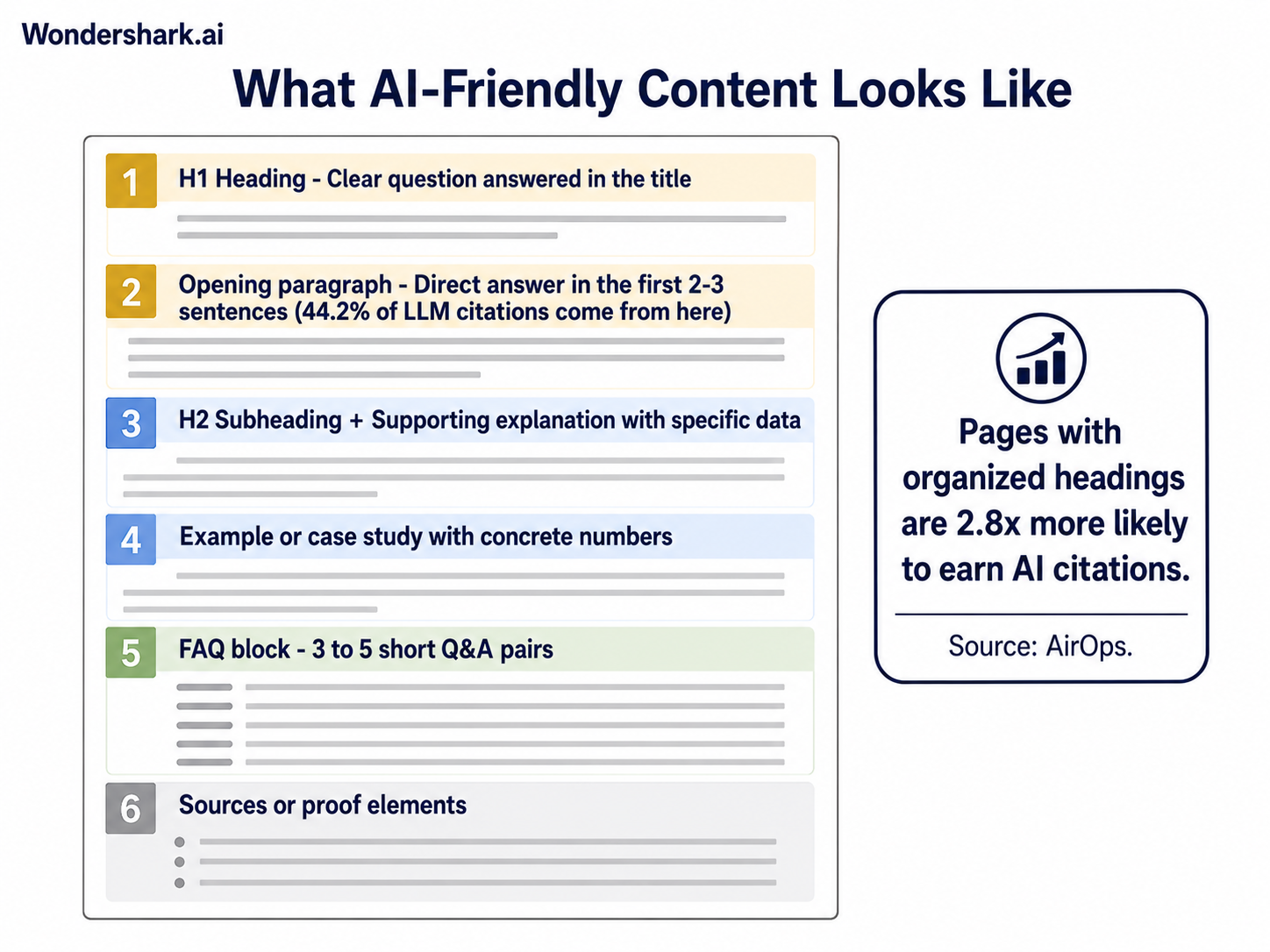
Structure matters as much as the content itself. Pages with well-organized headings are 2.8x more likely to earn AI citations. And 44.2% of all LLM citations come from the first 30% of a page - the intro. If your most useful insight is buried in paragraph six, it might as well not be there. Every piece of content should answer the main question in the opening paragraph, use simple headings that stand alone, and include specific examples or numbers. FAQ sections, comparison tables, and case study results all help because they give AI models clean, extractable answers.
The goal is not to repeat the same keyword repeatedly. The goal is to be the clearest, most specific answer to a real question - one that both a human and an AI can immediately understand and trust.
Your Authority Has to Exist Outside Your Website Too
This is probably the most important point in this entire post, and the one most brands do the least about.
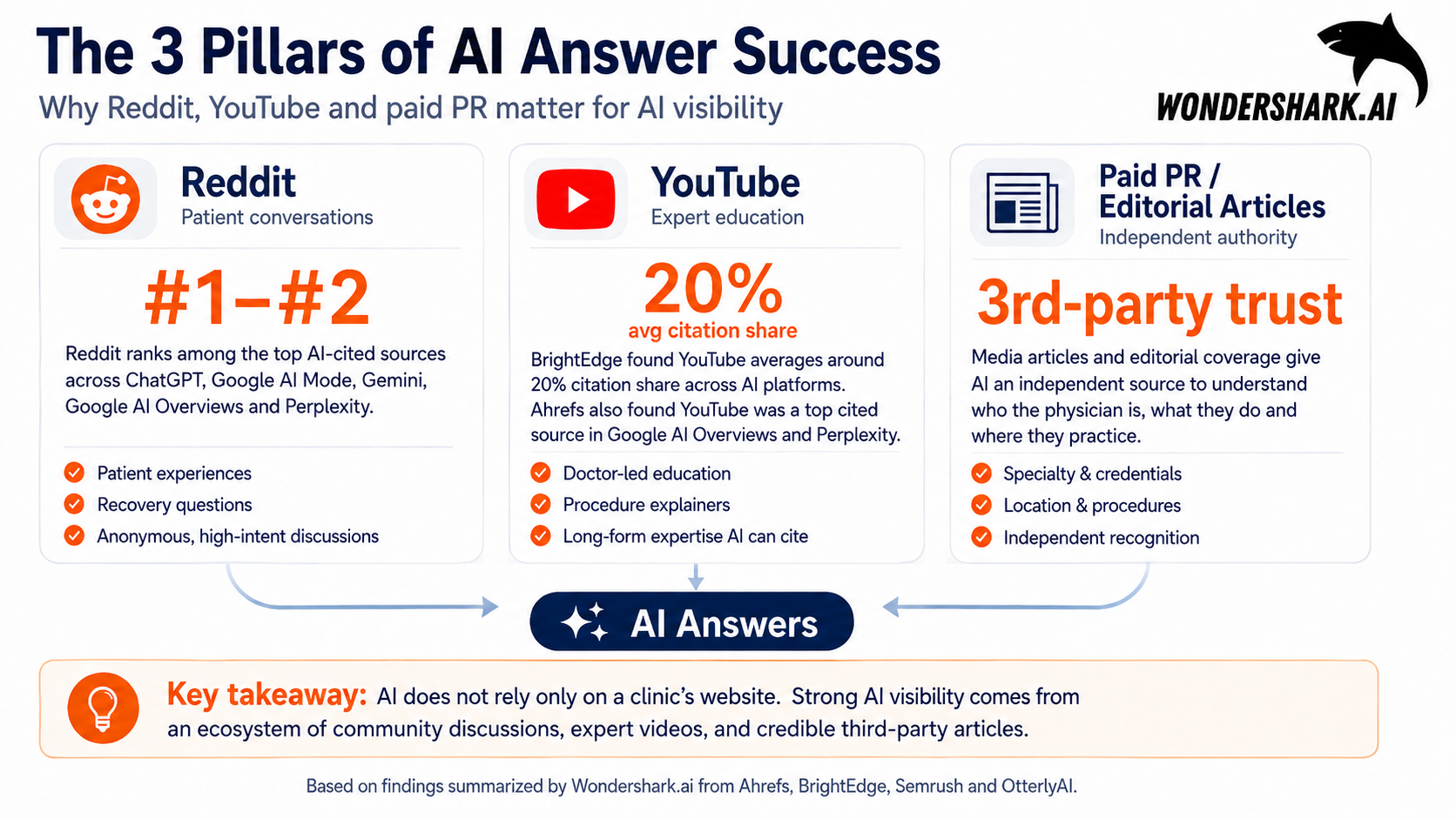
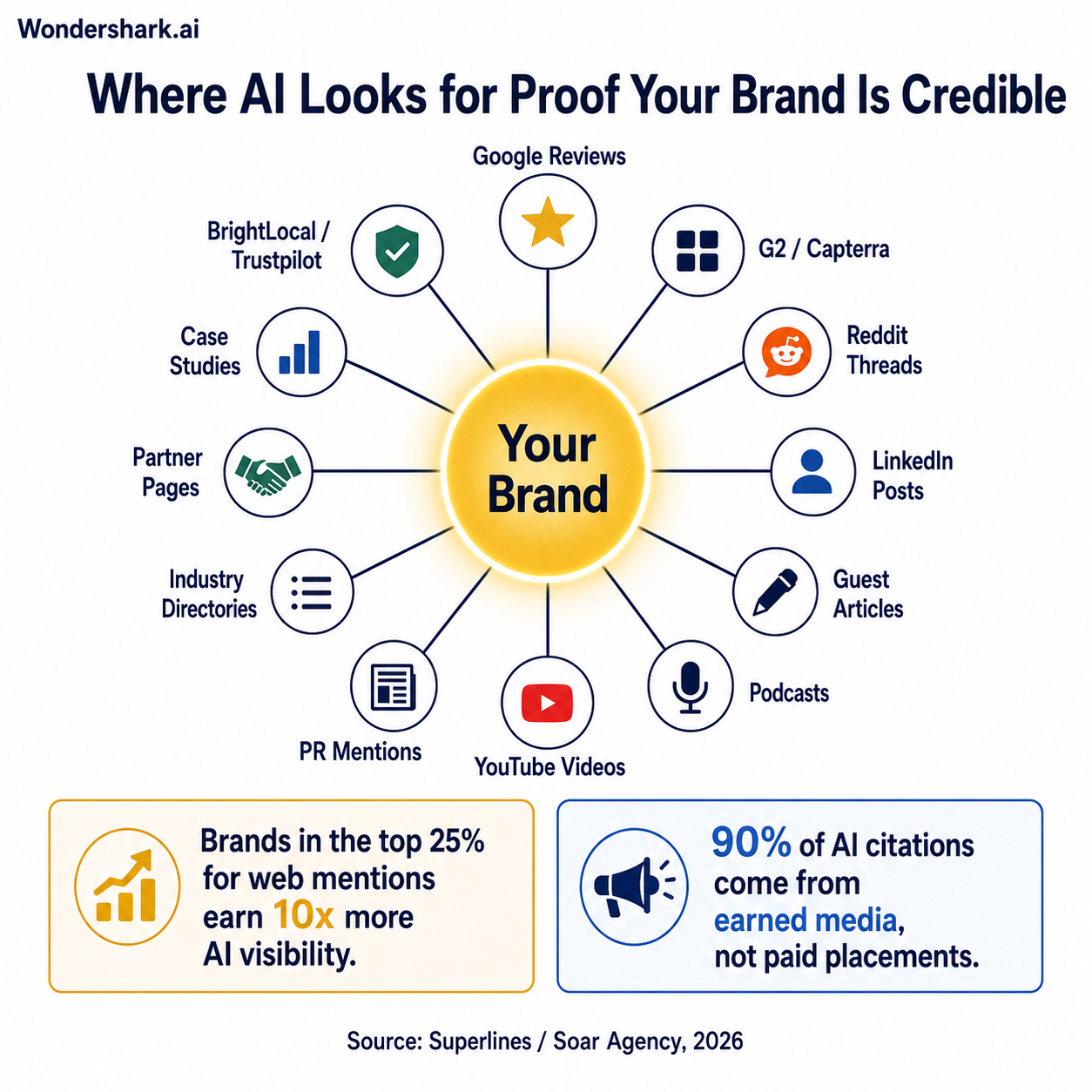
Every company can praise itself on its own website. Outside mentions carry more weight because they show that other people and platforms recognize the brand - and AI tools use that as a proxy for trustworthiness. 90% of AI citations come from earned and owned media, not paid placements. Brands in the top 25% for web mentions earn 10x more AI visibility than those with minimal outside presence. And brands are 6.5x more likely to be cited through third-party sources than through their own domain.
The local business data from BrightLocal makes this even clearer. The use of ChatGPT and other AI tools for local business recommendations grew from 6% to 45% in a single year - making AI the third most popular source for local recommendations, behind only Google and Facebook. BrightLocal also found that 88% of AI users check whether a review is legitimate when using AI recommendations, and 97% sometimes double-check AI answers against real reviews. Strong outside signals are not optional - they're what turns an AI mention into an actual conversion.
Outside authority can come from review platforms, guest articles, customer stories, directories, partner pages, podcasts, YouTube videos, LinkedIn posts, PR mentions, and industry roundups. The key is consistency. If you want to be known for AI visibility, that connection should appear across your website, LinkedIn profile, case studies, guest posts, interviews, and customer mentions. AI tools are far more confident recommending a brand when the web repeatedly connects it to the same topic across multiple independent sources.
A 30-Day Plan That Actually Works
You don't need to fix everything at once. The first 30 days should build a solid base - making your brand easier for AI tools to understand, trust, and cite.
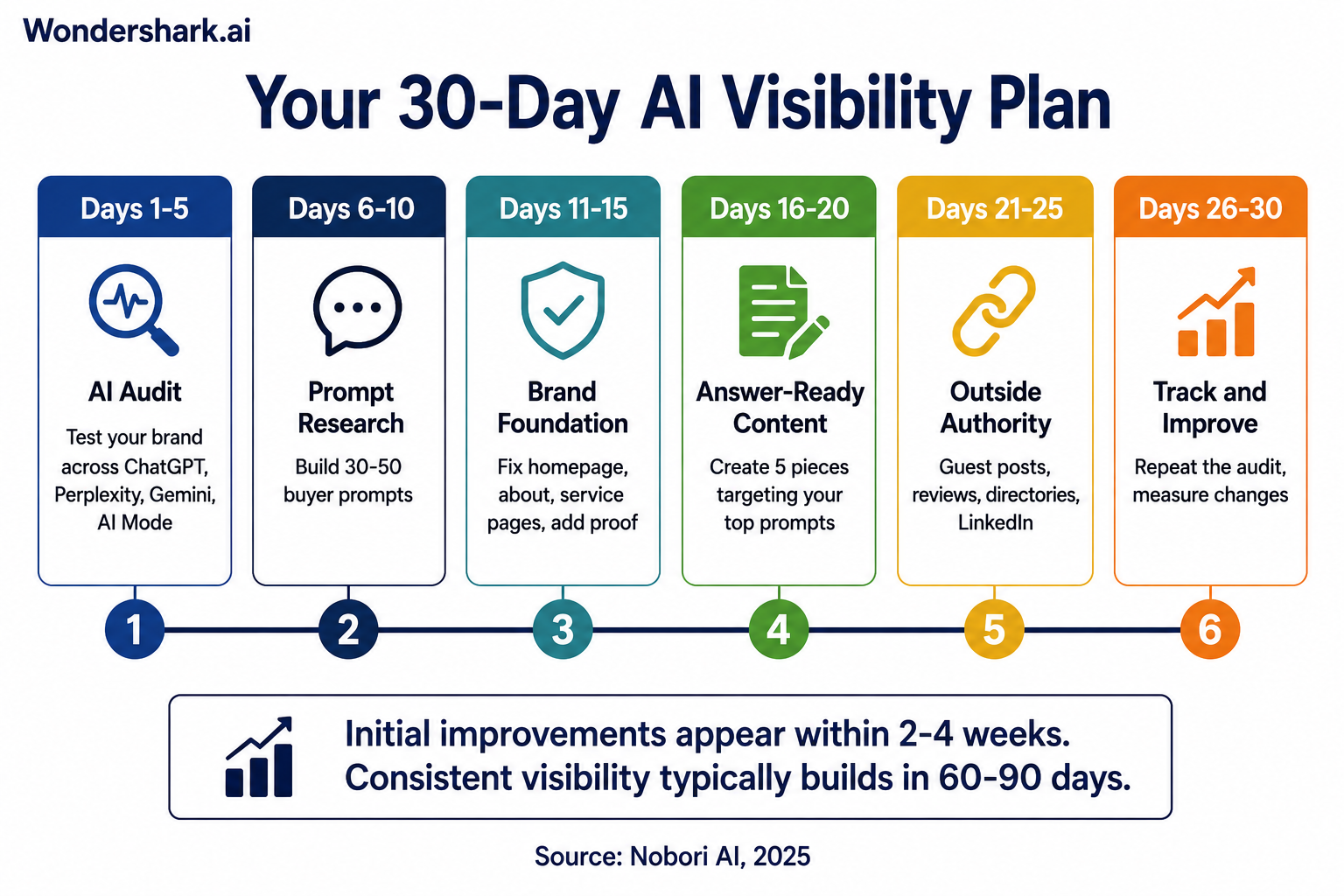
Days 1-5: Find out where you stand. Run your most important buyer questions in ChatGPT, Perplexity, Google AI Mode, Gemini, and Copilot. Use prompts like "Best [service] for [industry]", "Top [company type] in [location]", "Who offers [specific service]?", "[Your brand] vs [competitor]", and "What companies help with [problem]?" Track whether your brand appears, whether competitors appear, what sources are cited, and whether the information about you is accurate. This is your baseline. Without it, everything else is guesswork.
Days 6-10: Build your prompt list. SEO starts with keywords. AI visibility starts with prompts. A keyword might be "AI visibility agency." A prompt sounds more like: "What is the best agency to help my company show up in ChatGPT answers?" Build a list of 30 to 50 prompts your buyers might actually use - problem-based questions, comparison questions, location-based questions, competitor questions, and buying-intent questions. These prompts become the compass for everything else you create.
Days 11-15: Fix your brand foundation. Improve the pages that explain your business - homepage, about page, service pages, and contact page. Make sure they clearly answer who you are, what you offer, who you help, and why you are credible. Add proof: case studies, reviews, awards, media mentions, certifications, and clear results. BrightLocal found that 88% of AI users verify the source when acting on an AI recommendation. If your proof is thin, you'll get mentioned and then lose the conversion.
Days 16-20: Create answer-ready content. Write five strong pieces of content based on your most valuable prompts. Good starting topics are: What is AI visibility? AI visibility vs SEO. Why traffic drops even when rankings stay stable. How local businesses can show up in AI answers. How to choose an AI visibility agency. Each piece should answer the main question in the first paragraph, use simple headings, include real examples or numbers, and end with a short FAQ section.
Days 21-25: Build outside authority. Once your own site is clearer, start building presence elsewhere. Choose third-party opportunities that genuinely fit your brand - guest posts, review platforms, directories, partner pages, interviews, podcasts, LinkedIn articles, or niche publications. A small number of strong, relevant mentions beats a large number of weak ones. Consistency is what creates the pattern AI systems learn to trust.
Days 26-30: Track and repeat. Run the same AI searches you ran in days 1-5. Compare the results. Look for changes in brand mentions, competitor mentions, citations, answer accuracy, and which sources are being used. Don't expect everything to change in a month - AI visibility builds over time. The first 30 days are about building the base and finding early wins. From there, repeat the process every month.
The Simple Truth
AI answers are becoming a new layer of search. That doesn't mean SEO is over - it means SEO alone is no longer enough to capture the full buying journey.
The data is unambiguous. AI Overviews now appear on 48% of all tracked queries. Zero-click rates hit 83% when they appear. AI referral traffic to US retail sites grew 693% during the 2025 holiday season. AI search traffic converts at 14.2% compared to 2.8% for Google organic. And 38% of business decision-makers have already allocated budget to AI search optimization - with more following every quarter.
The brands that act now build a compounding advantage. The goal is no longer only to rank. The goal is to become a trusted answer.
Want to See Where Your Clinic Stands?
At Wondershark.ai, we measure how physicians and medical clinics appear across leading AI platforms, compare their visibility with competing physicians, and identify the sources influencing those answers.
We also establish your current AI visibility and determine the visibility target you need to reachyour desired number of new consultations and patients.
If you want to see where your clinic stands in AI search, we can show you how visible you are today, where the biggest opportunities are to improve, and how much additional visibility may be needed to achieve your patient-growth goals.
Frequently Asked Questions
What is AI visibility?
AI visibility measures how often and how accurately a physician, clinic, or brand appears when people ask AI platforms for information, comparisons, or recommendations.
How is AI visibility different from traditional SEO?
SEO measures rankings, traffic, backlinks, and clicks in conventional search results. AI visibility measures mentions inside generated answers, citation sources, recommendation position, accuracy, sentiment, and competitive share.
Can a clinic rank well on Google but remain invisible in AI answers?
Yes. AI platforms may use sources that do not rank highly in traditional search. Strong SEO remains valuable, but it does not automatically make a physician part of an AI-generated recommendation.
What should a clinic do during days 1–5?
Test important patient questions across ChatGPT, Gemini, Perplexity, Copilot, and Google AI. Record whether the clinic appears, which competitors are recommended, which sources are cited, and whether the information is accurate.
How many patient prompts should be tested?
The plan recommends building a list of 30–50 prompts representing how real patients research physicians, procedures, locations, risks, recovery, costs, candidacy, and treatment alternatives.
What types of prompts should medical practices include?
Include procedure-specific questions, local recommendation questions, physician comparisons, patient concerns, treatment alternatives, and high-intent questions such as “Who is the best qualified physician for this procedure in my city?”
What should a clinic improve during days 11–15?
Strengthen the homepage, provider biographies, procedure pages, location pages, and contact or consultation page. Clearly explain the physician’s expertise, services, patients served, geographic market, credentials, and supporting proof.
What is answer-ready content?
Answer-ready content gives a clear response near the beginning, uses descriptive headings, provides specific evidence or examples, and includes structured elements such as FAQs, comparison tables, definitions, and case-study results.
How much new content should be created during days 16–20?
The plan recommends creating approximately five strong pieces based on the highest-value patient prompts. Quality, relevance, and clarity are more important than publishing a large volume of generic articles.
Why is third-party authority important?
Every clinic can make claims on its own website. Independent reviews, professional profiles, media coverage, interviews, directories, videos, and expert mentions give AI platforms additional evidence that the physician is credible and relevant.
Which external sources are most useful for physicians?
Useful sources can include medical directories, professional associations, hospital profiles, review platforms, healthcare publications, local media, YouTube, podcasts, partner websites, and relevant patient discussions.
What should be measured during days 26–30?
Repeat the original prompt tests and compare brand mentions, citations, recommendation positions, competitors, sentiment, source selection, and answer accuracy. The clinic should also begin tracking AI-influenced consultations and patients.
How often should the process be repeated?
The prompt set and competitive results should be reviewed at least monthly. AI answers and citation sources change, so visibility requires continuous monitoring and adjustment.
Should a clinic expect major results within 30 days?
Not necessarily. The first month is designed to establish the baseline, correct foundational weaknesses, and identify early movement. Strong AI visibility usually develops through consistent content, authority building, and repeated measurement.
Does the 30-day plan guarantee AI recommendations?
No. It makes the physician easier for AI platforms to discover, understand, and evaluate, but recommendations also depend on competition, third-party authority, relevance, reputation, and each platform’s changing source-selection process.