AI Visibility for Local Businesses via LinkedIn
My name is Marc Duquette, CEO of Wondershark.ai. If you want to see where your brand actually stands in AI-generated answers today, I can show you. Schedule a call with me or get your free 2026 AI visibility report.
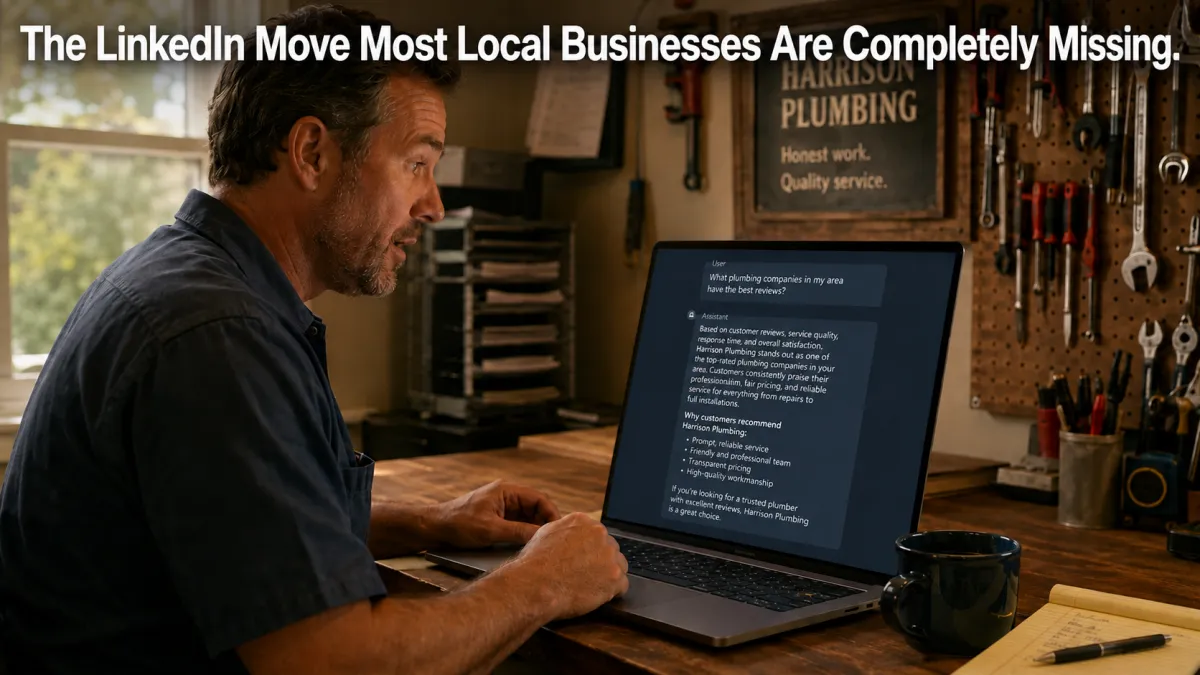
Here's a scenario playing out right now across thousands of small and mid-sized local businesses. A plumber, a physiotherapist, a landscaping company, an accountant. They've been blogging consistently. They have a decent website. They get some Google traffic. And then someone on their team asks: "Why don't we show up when people ask ChatGPT for recommendations in our area?"
The answer is almost always the same. Their content exists. It's just not showing up anywhere AI can find it in a trusted, human-sounding context. The fix is simpler than most people think - and it runs through a platform most local businesses have completely written off.
LinkedIn Just Became One of the Most Cited Sources in AI Search
Most local service businesses have ignored LinkedIn for years. That made sense in 2022. It's an expensive oversight in 2026.
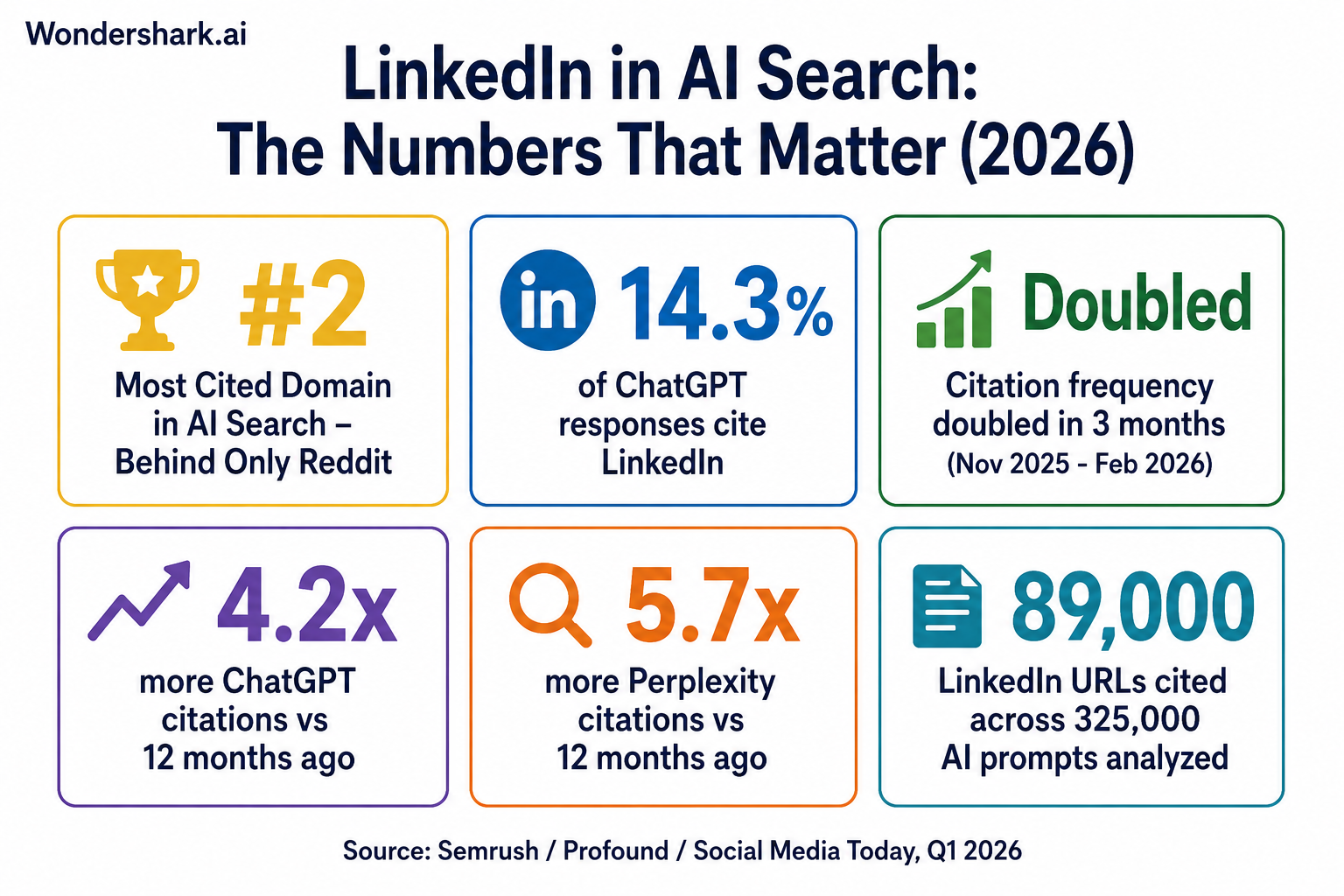
Between November 2025 and February 2026, LinkedIn's domain rank on ChatGPT jumped from roughly #11 to #5 - the largest single domain authority shift tracked all year, according to Profound's analysis of 1.4 million citations. Across all major AI platforms - ChatGPT, Gemini, Google AI Mode, Copilot, and Perplexity - LinkedIn is now the #1 cited domain for professional queries and the #2 cited domain overall, behind only Reddit.
Semrush's analysis of 325,000 unique prompts across ChatGPT, Google AI Mode, and Perplexity found 89,000 LinkedIn URLs being cited in AI-generated responses. LinkedIn appeared in 14.3% of ChatGPT responses and 13.5% of Google AI Mode responses. That puts it ahead of Wikipedia, YouTube, and every major news publisher. Citation frequency has more than doubled in the past year, with ChatGPT citing LinkedIn content 4.2x more and Perplexity citing it 5.7x more than 12 months ago.
This is not a social media trend. It's a structural change in how AI assembles answers to professional questions - and most local businesses haven't noticed yet.
Personal Accounts Beat Company Pages - and That's Good News for Small Businesses
Here's the part that changes the game for local businesses. The data on what AI platforms actually cite on LinkedIn is the opposite of what most companies assume.
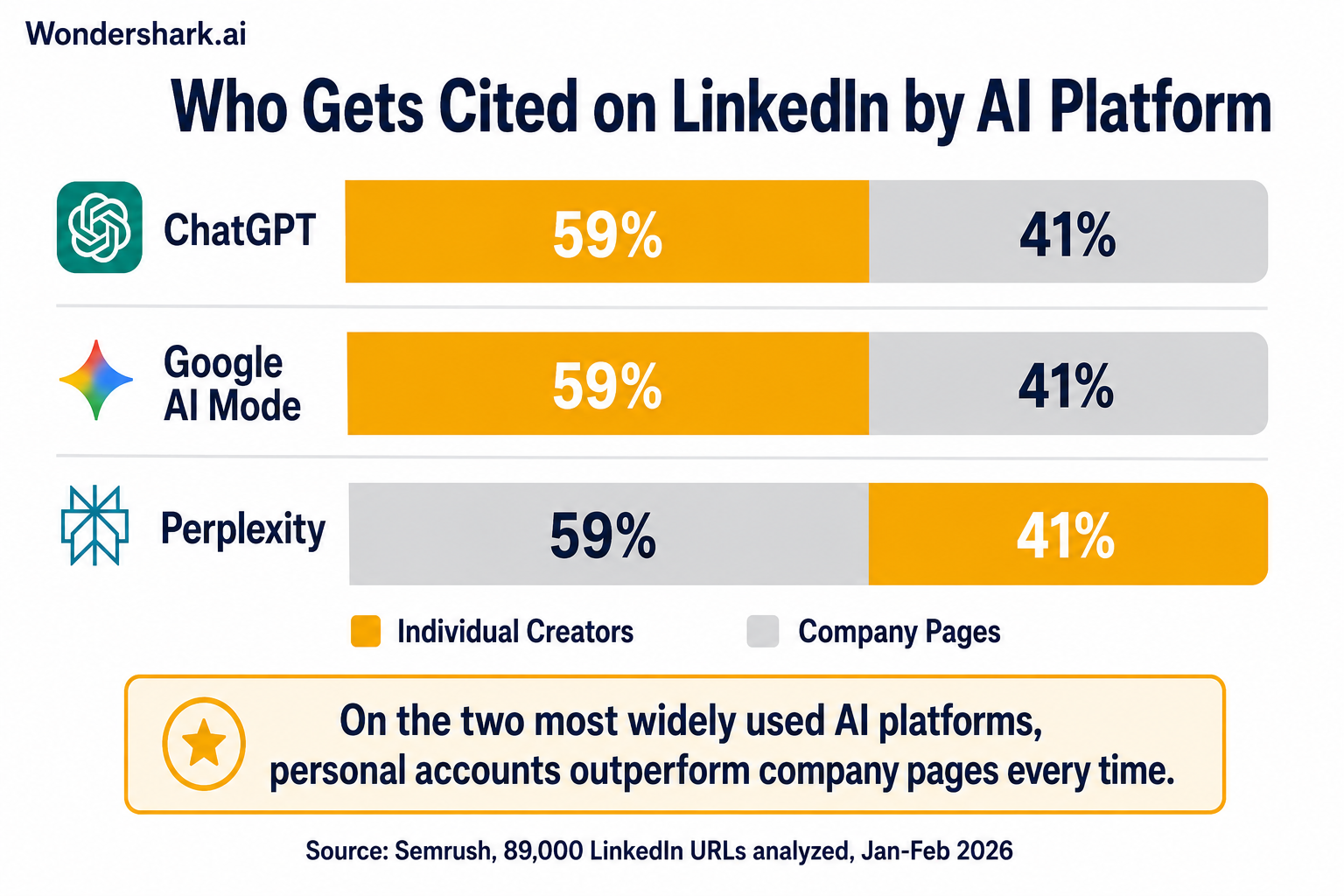
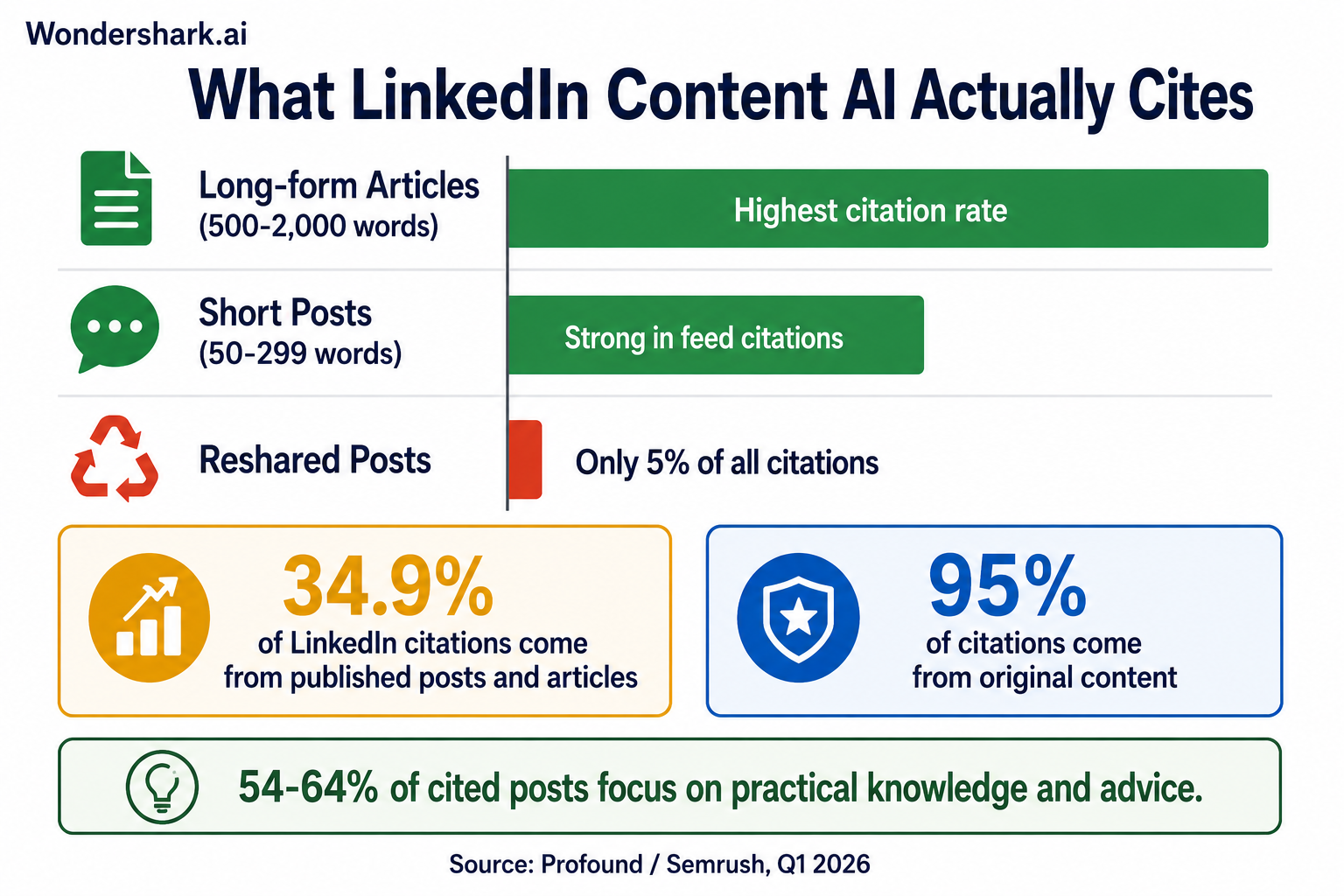
On ChatGPT and Google AI Mode, individual creators account for 59% of LinkedIn citations - compared to just 41% for company pages. Perplexity shows the reverse (favoring company pages at 59%), but ChatGPT drives the lion's share of AI referral traffic, so the individual creator advantage is the one that matters most for reach. Original content accounts for 95% of all AI citations from LinkedIn. Reshared posts account for just 5%.
For a local business owner or their most experienced team member, this is genuinely good news. You don't need a content team. You don't need a polished brand voice. You need a personal account, real expertise, and consistency. 75% of cited LinkedIn authors post at least 5 times per month. The AI doesn't reward virality - most cited posts have only 15-25 reactions. It rewards showing up regularly with content that actually answers a real question.
LinkedIn also shows the highest semantic similarity scores of any major platform - 0.57 to 0.60 - meaning AI responses closely mirror the original content found there. If you write a clear, specific, expert answer to a common question in your service area, the AI is likely to echo it almost verbatim. That's brand control at the AI layer that most local businesses don't even know is available to them.
What "Repurposing" Actually Means in Practice
Most local businesses that blog are doing so for SEO - keyword-targeted articles, service pages, FAQ content. That content has value. But it's sitting on one domain, waiting to be crawled by Google. Repurposing it into personal LinkedIn posts multiplies its surface area dramatically, and does so on a platform AI systems are actively pulling from right now.
The format question matters more than most people realize. Articles between 500 and 2,000 words earn the most AI citations on LinkedIn, while shorter feed posts perform best at 50-299 words. Profile pages, which used to account for a third of all LinkedIn citations, have dropped sharply - published content like posts and articles now accounts for 34.9% of all LinkedIn citations, up from 26.9% a year ago. Active publishing is gaining weight fast. Passive presence - maintaining a company page and posting occasionally - is losing it.
Here's what this looks like in practice. Say you have a blog post titled "5 signs your HVAC system needs replacing before winter." That post lives on your website and ranks for a local keyword. To turn it into a LinkedIn visibility asset, take the core insight and write it as a first-person post from the owner's account. Something like: "In 15 years of servicing HVAC systems in [city], here's what I see homeowners miss every single fall..." Then walk through the key points in plain, conversational language. No corporate polish. Just a practitioner sharing what they actually know.
Specificity is what gets cited. "I've replaced 200 water heaters in [city] and here's what the cheap ones all have in common" is the kind of sentence that ends up in an AI answer. Vague advice gets ignored. The 54-64% of cited LinkedIn posts that AI favors are the ones sharing knowledge and practical advice - not promotional updates, not company news, not motivational quotes.
The Gap Most Local Businesses Haven't Spotted Yet
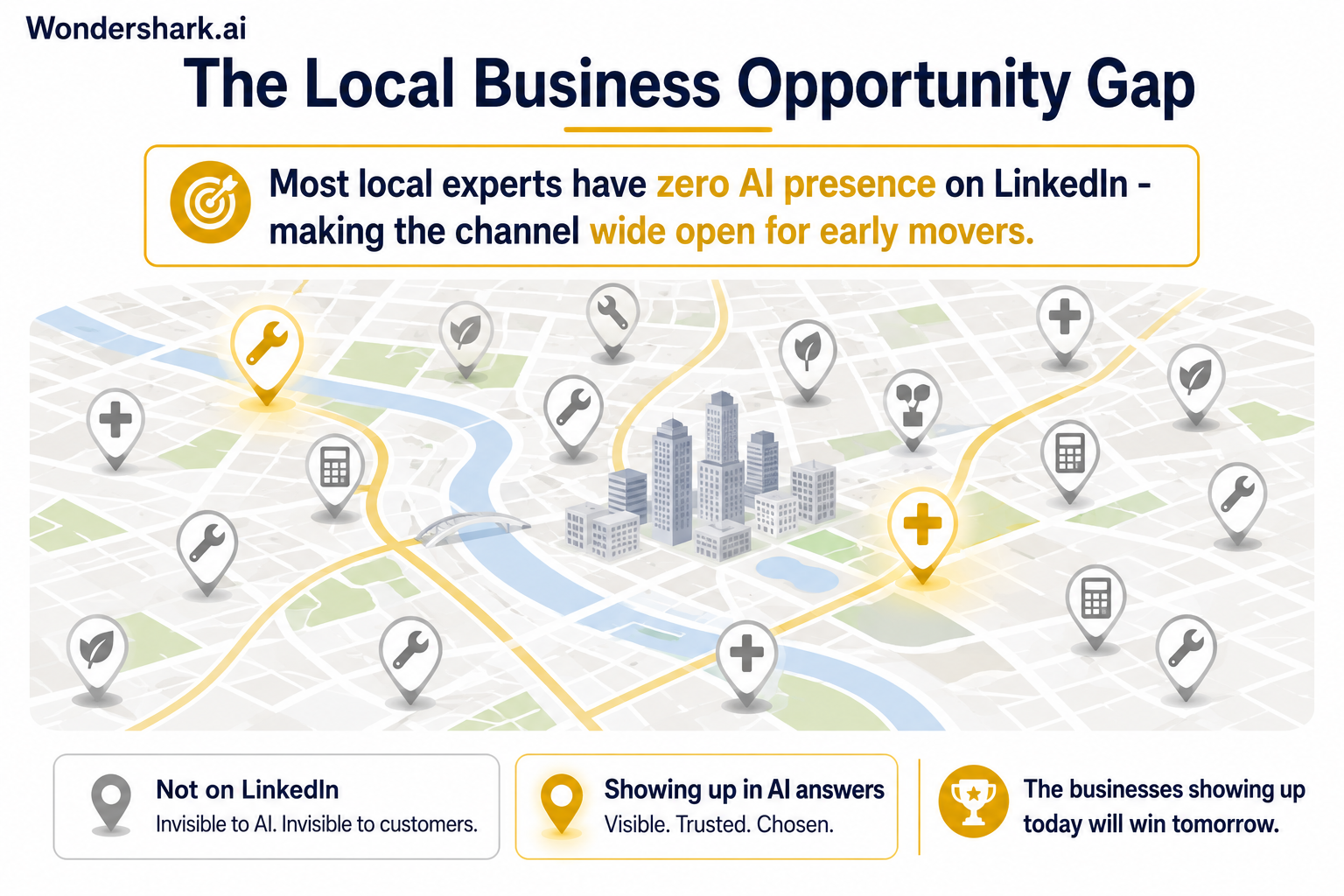
Here's the honest opportunity: almost none of your local competitors are doing this. National brands have LinkedIn content teams. Enterprise companies have editorial calendars. But the electrician in your city with 20 years of experience? Not posting anything. Which means the vacuum is wide open.
LinkedIn's algorithm increasingly rewards accounts that stay focused on one topic area. Posting consistently about one subject builds citation authority faster than trying to cover everything. For a local business, that's easy. You do one thing in one place. Post about it from a personal account, consistently, and answer the questions your customers actually ask you in person.
At Wondershark.ai, we've tracked over 10,000 AI prompts across categories including local services. The pattern is consistent: when a local expert posts regularly on LinkedIn with real specificity and from a personal account, they start appearing in AI recommendations for their service area within months - often ahead of businesses with far stronger SEO profiles. The blog posts are already written. The expertise is already there. The platform is actively being cited by AI tools your customers are using right now.
The only missing piece is showing up and putting it in writing.
Wondershark.ai has tested over 10,000 AI prompts and brand mentions to understand what drives AI visibility for businesses of all sizes.
My name is Marc Duquette, CEO of Wondershark.ai. If your business isn't showing up in AI-generated recommendations for your service area, I want to show you how to fix that. Schedule a call with me or get your free 2026 AI visibility report.