How One Seattle Plastic Surgery Practice Used AI Visibility to Compete With Chains
My name is Marc Duquette, CEO of Wondershark.ai. If you want to see where your brand actually stands in AI-generated answers today, I can show you. Schedule a call with me
Part 1 showed what can happen when a plastic surgery clinic starts showing up in AI search. This time, the story is even more interesting.
This was not a large chain. It was not a multi-location group with a huge budget. It was a small standalone plastic surgery practice in Seattle.
The surgeon had a good reputation. The reviews were solid. Patients were happy. The work spoke for itself.
But there was one big problem.
When people asked ChatGPT, Perplexity, or other AI tools about plastic surgeons in Seattle, the practice was not showing up enough. Meanwhile, bigger chain competitors had more locations, more pages, more mentions, and more overall brand reach.
That is the part a lot of smaller practices feel in their gut. They know they do great work, but online they are fighting brands with more scale.
And that is exactly why AI visibility matters.
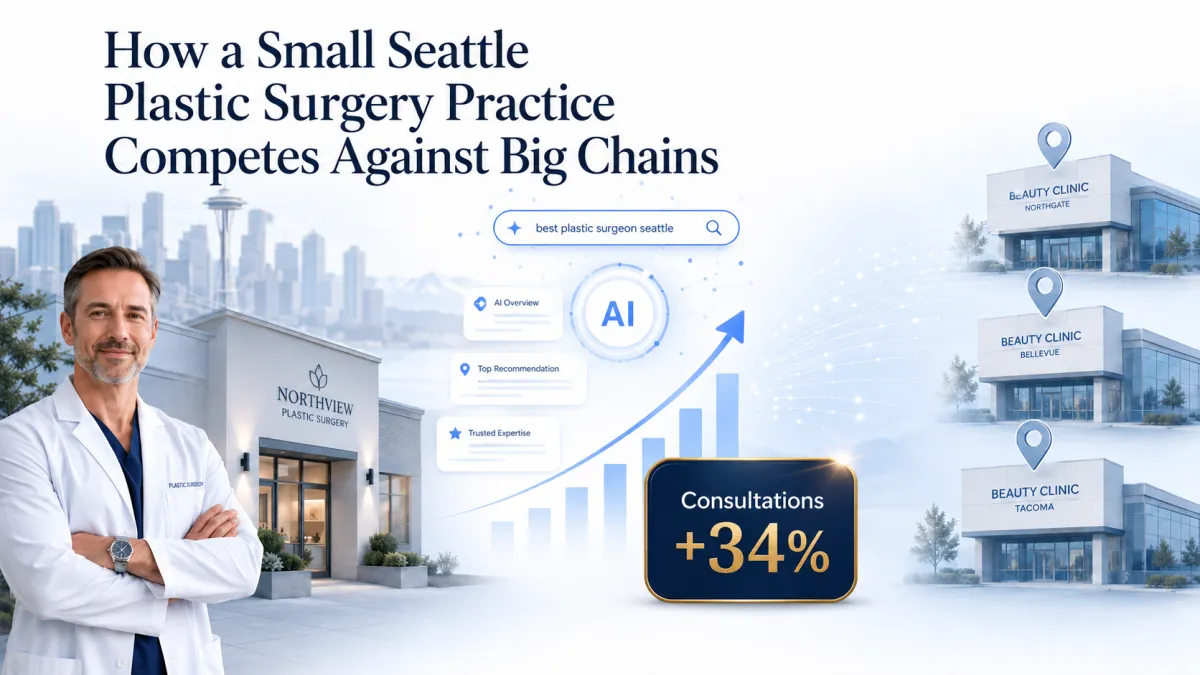
The first Seattle case study showed a clinic growing AI visibility and generating 5 to 10 additional patients per month in 90 days. This Part 2 looks at the bigger lesson behind that result: a standalone practice can compete with chains when it wins the AI visibility layer.
The real competition is changing
A few years ago, most clinics were thinking about Google rankings, referrals, and paid ads. Those still matter. But now there is a new layer.
People are asking AI tools for recommendations, comparisons, and procedure advice before they ever book a consultation.
That shift matters a lot in plastic surgery because this is a high-trust category. Patients do not make these decisions fast. They compare surgeons. They look at before-and-after photos. They read reviews. They research recovery. They ask about pricing. They want to feel safe before they reach out.
The market is also big enough to make that fight worth winning. According to the American Society of Plastic Surgeons, there were nearly 1.6 million cosmetic surgical procedures in the U.S. in 2024. Liposuction led the list with 349,728 procedures. Tummy tucks reached 171,064 procedures. On top of that, minimally invasive procedures passed 28.5 million in 2024.
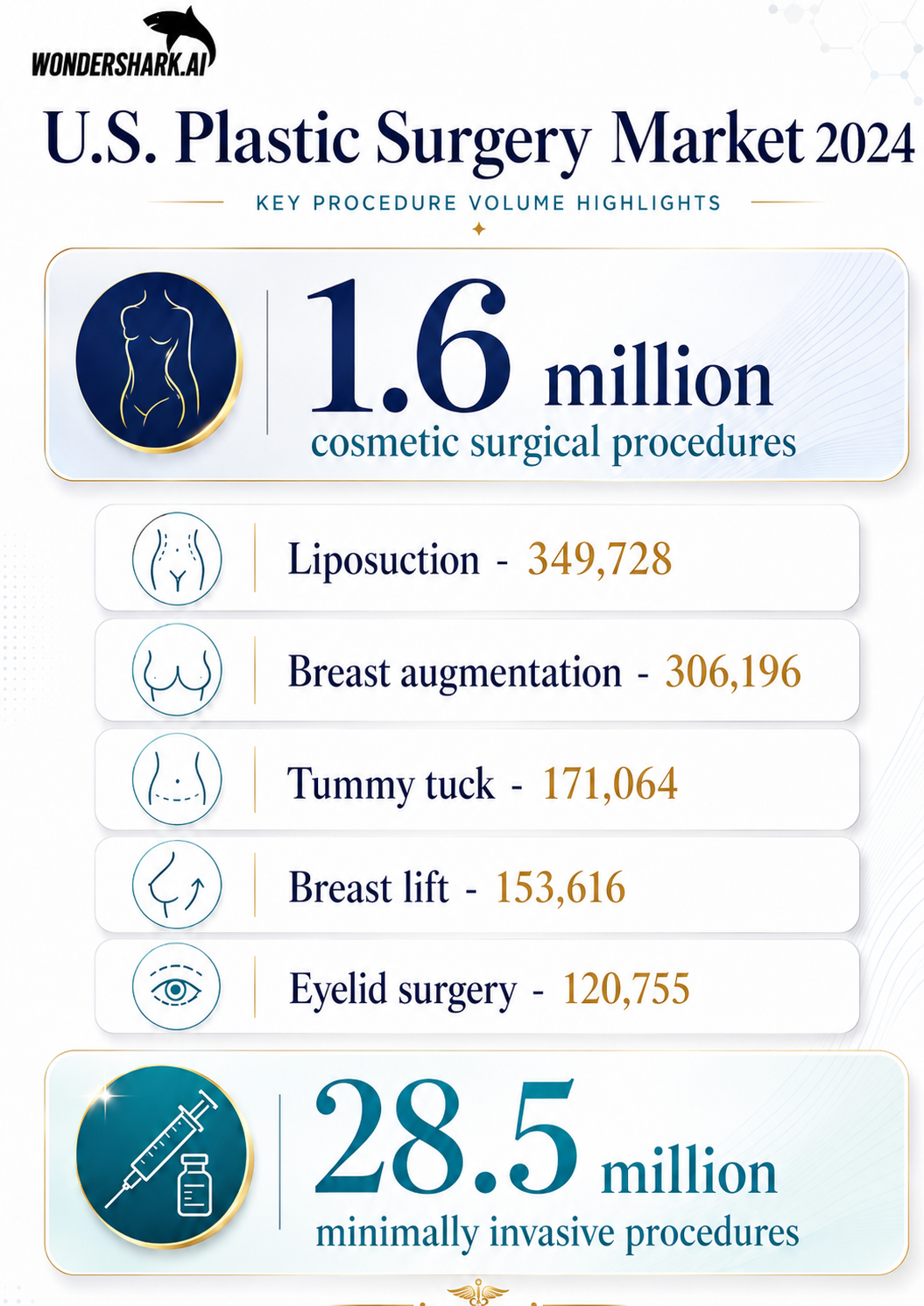
Source: ASPS 2024 Plastic Surgery Statistics.
Why chains look hard to beat
Here is the honest truth. Chains and bigger groups do have advantages.
They often have more domain authority, more locations, more service pages, bigger ad budgets, and sometimes multiple brand names pushing into the same market. In Seattle, that gives chain-style players and larger groups more chances to show up in search and AI answers.
They also benefit from scale. A large group can publish more content, collect more reviews, and spread its brand across more locations.
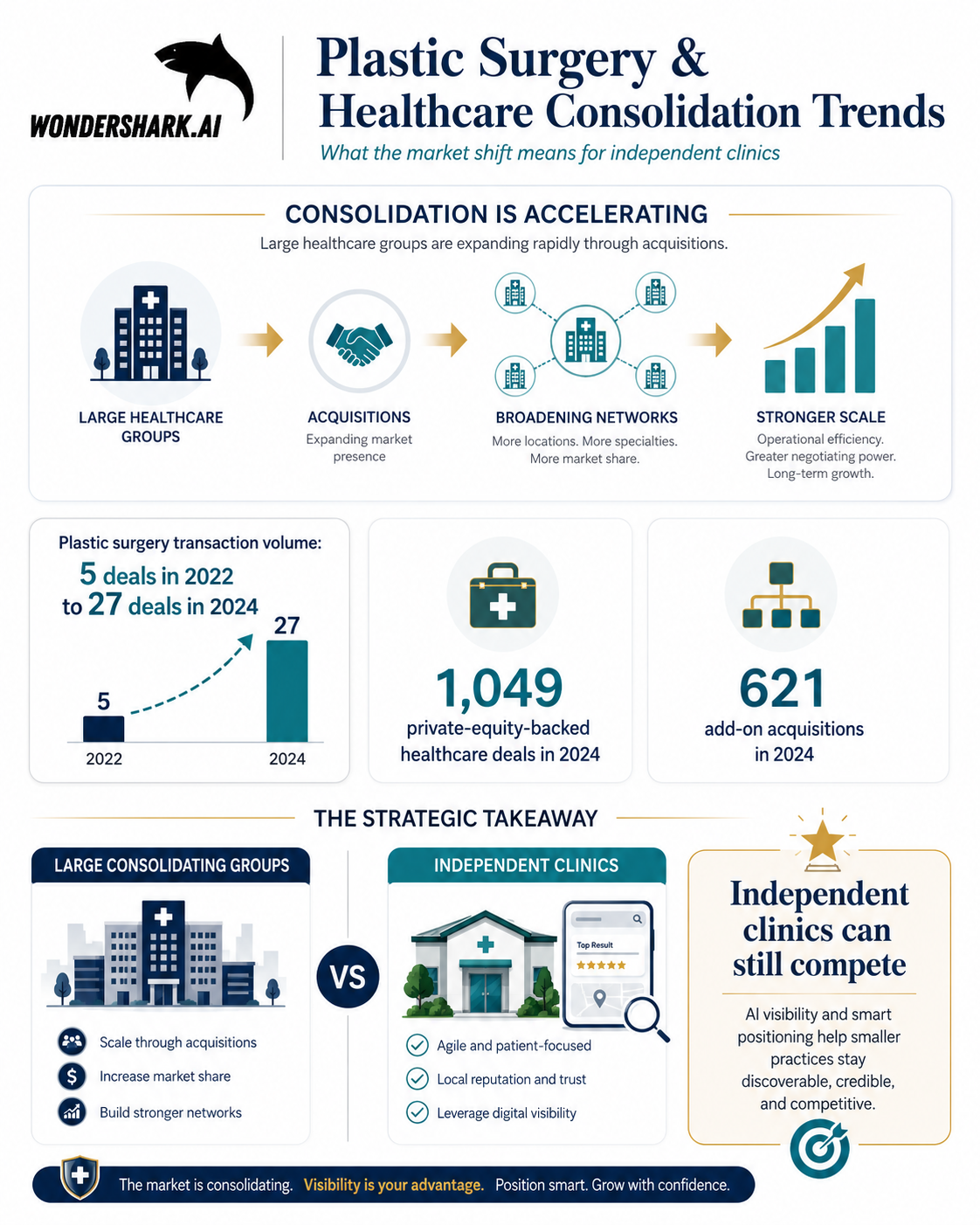
And the pressure is not slowing down. Plastic surgery is getting more attention from investors and platform buyers. One 2026 valuation analysis said plastic surgery transaction volume rose from 5 deals in 2022 to 27 deals in 2024. Source: Focus Bankers Plastic Surgery Practice Valuation.
A broader healthcare consolidation report tracked 1,049 private-equity-backed healthcare deals in 2024, including 621 add-on acquisitions. Source: Private Equity Stakeholder Project.
My opinion is simple. If you are a small independent practice and you wait too long, you give chains more time to lock up attention.
Why a standalone practice can still win
Here is the good news.
AI does not only reward size. It also rewards relevance, clarity, authority, and trust.
That creates an opening for smaller independent practices.
A great standalone surgeon usually has something chains struggle to match. Real expertise with a personal name attached to it. A direct point of view. Better story-driven trust. More credibility around why a patient should choose this doctor, not just this brand.
That is a huge edge in plastic surgery.
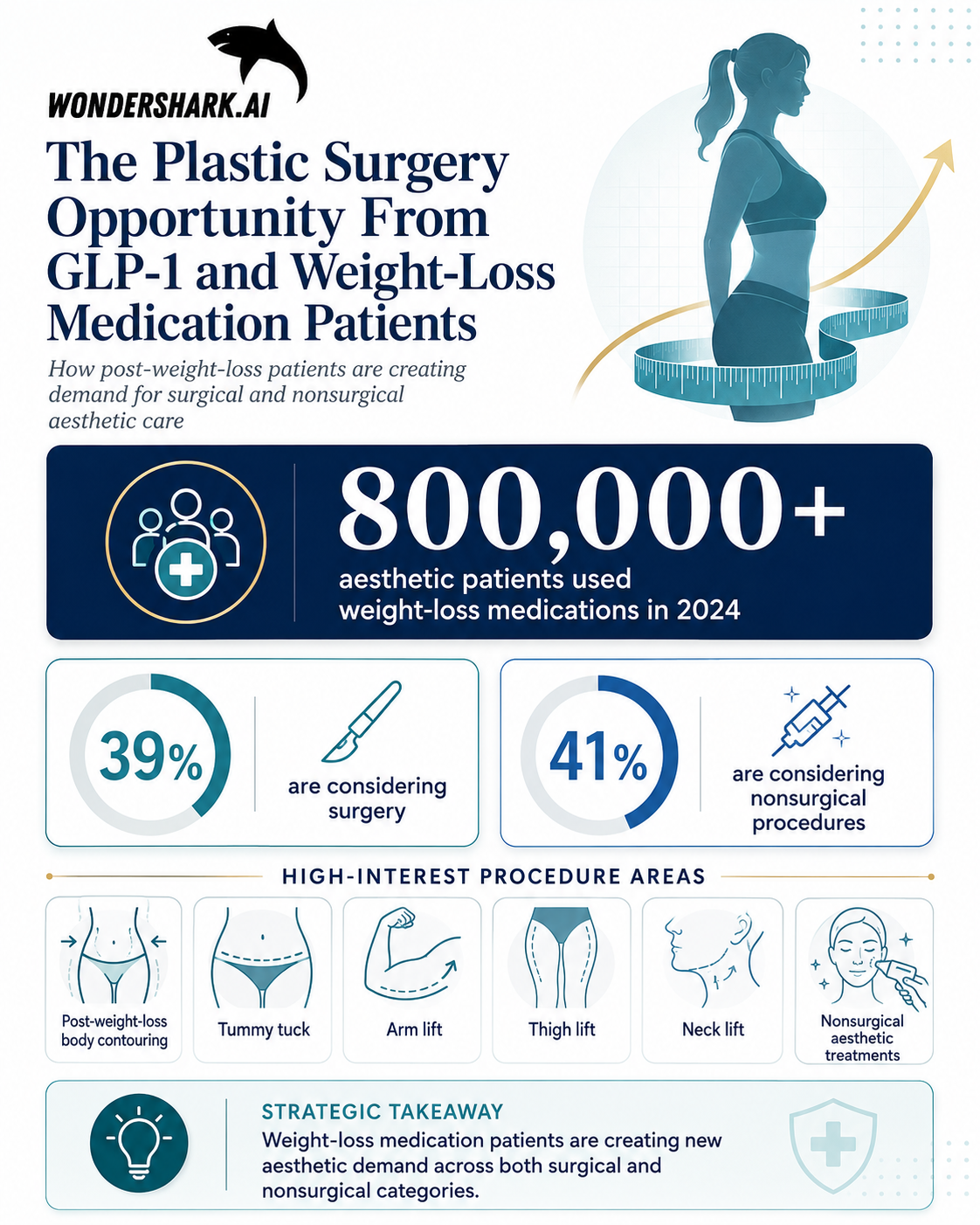
It is even more important right now because patient demand is spreading across both surgery and non-surgical care. ASPS says more than 800,000 aesthetic patients used weight-loss medications in 2024. Among GLP-1 patients under ASPS member surgeons, 39% were considering surgery and 41% were considering a nonsurgical procedure. That creates a big opportunity around post-weight-loss body contouring, tummy tuck, arm lift, thigh lift, neck lift, and skin tightening content. Source: ASPS 2024 Plastic Surgery Statistics.
So the goal was not to outspend chains.
The goal was to out-position them.
The strategy
The practice needed to become easier for AI tools to trust and easier for potential patients to discover.
So the strategy focused on four things.
First, we researched the real questions patients ask before booking a consultation. Then, we built content around the best opportunities: questions with strong patient intent and lower competition from bigger brands. This was not broad fluff. It was based on real searches and real concerns, like how to choose a plastic surgeon in Seattle, what to ask during a consultation, recovery timelines, cost expectations, and who is a good candidate for different procedures.
Second, we focused on the procedures where this specific practice could stand out. Instead of chasing only broad cosmetic surgery terms, we leaned into higher-trust and higher-consideration procedures. The content highlighted the surgeon’s expertise, credibility, safety standards, and the personal care patients could expect from a standalone practice.
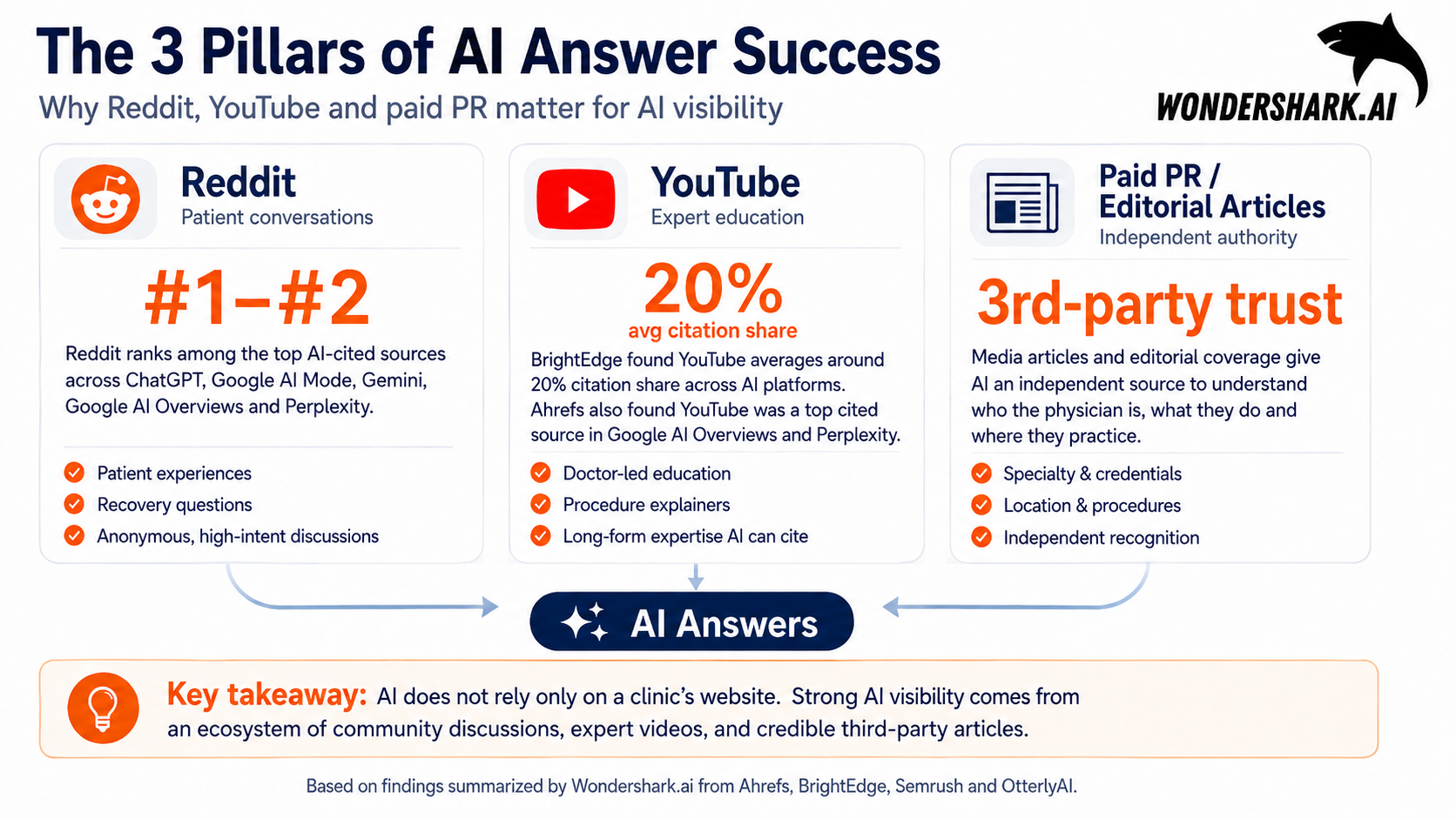
Third, we improved the practice’s authority signals. The goal was to make it easier for AI systems to connect the dots between the surgeon, the procedures, the reputation, the location, and the proof behind the practice. That meant going beyond the website. A lot of clinics still think their website alone is enough, but AI answers are shaped by a much broader web footprint. So the strategy included third-party content, discussion-based content, and brand mentions in places that help AI models validate credibility.
Fourth, we tracked the competition closely. We were not measuring the practice in isolation. We watched the chain competitors in the same Seattle market to see if they were gaining visibility, where they were showing up, and where the gaps were. That helped us find openings the standalone practice could win faster.
The result
The outcome was exactly what a smaller practice wants to see.
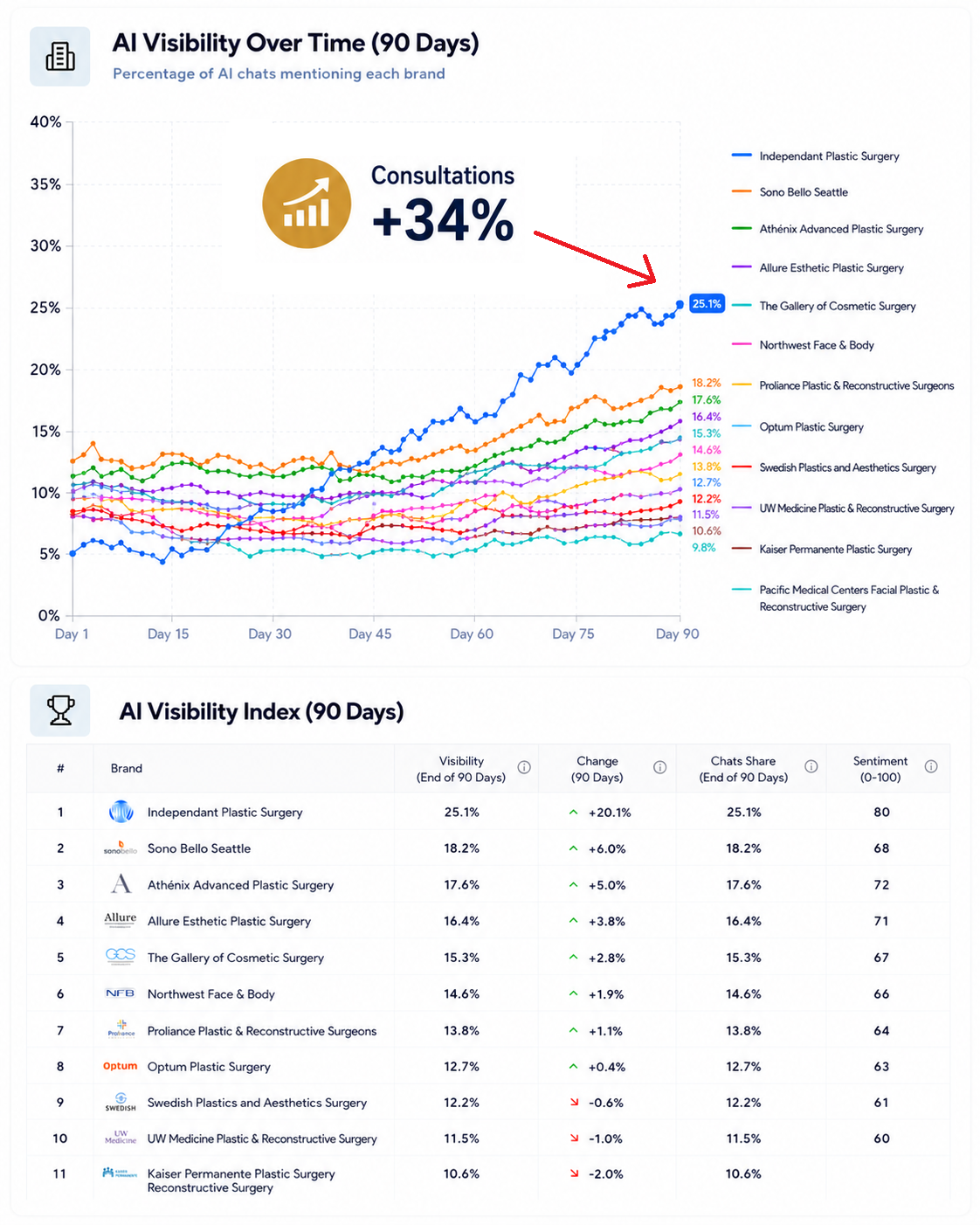
The standalone clinic increased its AI visibility significantly over the campaign period. More importantly, that visibility translated into real business results, not vanity numbers.
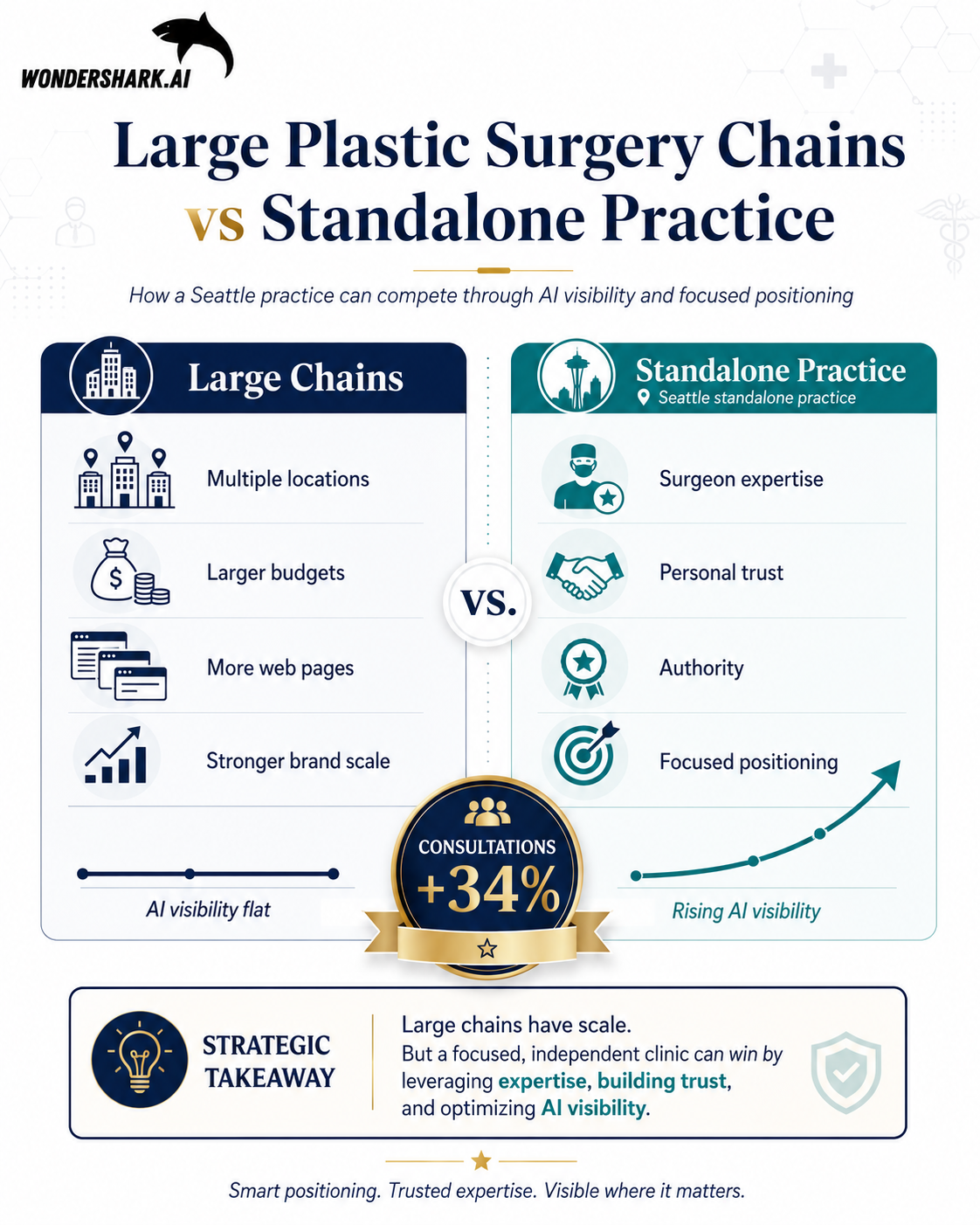
The clinic began generating 5 to 10 additional new patients per month.
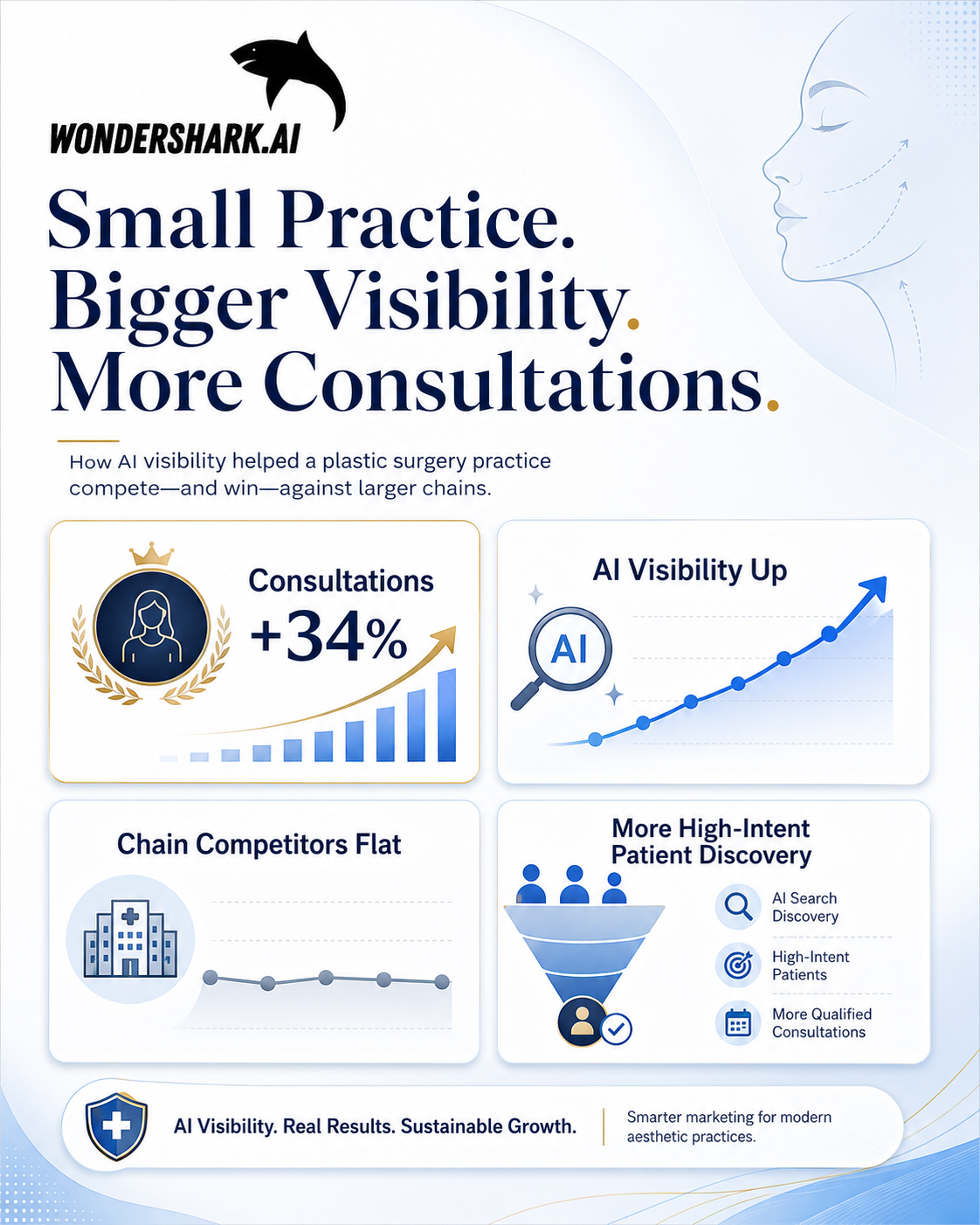
At the same time, several chain competitors in the Seattle market stayed mostly flat in AI visibility during the same period, based on campaign tracking. They still had scale. They still had brand reach. But they were not improving fast enough in the AI layer.
That gave the smaller practice an opening, and it used it.
The result was not just more attention. It was better positioning.
The practice started showing up more often in the kinds of research journeys that lead to real consultations. That includes procedure-specific questions, comparison-style questions, and local recommendation queries where trust matters a lot.
And that is the part many clinics miss. A standalone practice does not need to beat every chain on every metric. It just needs to win enough of the right moments.
What this proves
This case says something important.
Independent plastic surgery practices are not locked out of AI search just because chains are bigger.
In fact, I think many chains are easier to beat than people assume. They often rely on their size. They assume brand scale is enough. But AI visibility is not only about having more pages. It is about being the best answer.
A smaller practice with a strong surgeon, clear positioning, and a real AI visibility strategy can absolutely compete.
Maybe not by doing more of everything.
But by doing the right things better.
That is the opportunity.
Final thought
If you run a standalone plastic surgery practice, the message is pretty clear.
You do not need a giant footprint to compete.
You need a strong reputation, a clear strategy, and a system that helps AI tools understand why your practice deserves to be recommended.
The chains already have size.
You can still win on trust.
And in plastic surgery, trust is the whole game.
If your practice has strong reviews and great patient results but still is not showing up enough in AI-generated answers, that is fixable.
The clinics that move now will have a serious edge over the ones that wait.
My name is Marc Duquette, CEO of Wondershark.ai. If you want to see where your brand actually stands in AI-generated answers today, I can show you. Schedule a call with me