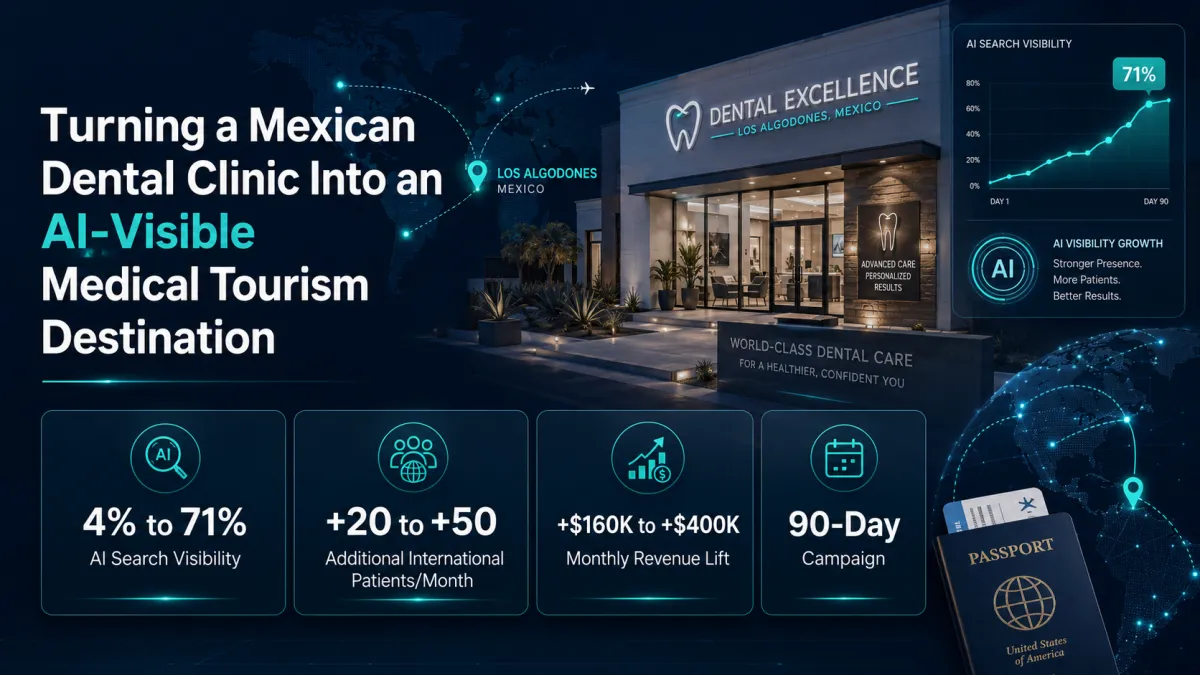
How We Helped a Mexican Dental Tourism Clinic Go From 4% to 71% AI Search Visibility in 90 Days and Generate 20 to 50 Additional International Patients per Month
My name is Marc Duquette, CEO of Wondershark.ai, and if you want to see where your clinic shows up when patients ask ChatGPT, Gemini, Claude, or Perplexity for trusted dental tourism recommendations, I can show you.
This case study is based on a large dental tourism clinic in Los Algodones, Mexico, a city already known for attracting patients from the United States, Canada, and Europe who are looking for high-quality dental care at a more affordable price.
The clinic was not in trouble. It had experienced dentists, a strong reputation, a modern facility, good patient reviews, and a steady flow of international patients coming in for dental implants, All-on-4 implants, full mouth restorations, veneers, and smile makeovers.
But there was one problem that was becoming harder to ignore.
When patients asked AI tools which dental clinics in Mexico they should trust, the clinic was barely showing up. It had a strong real-world presence, but it was almost invisible in the AI search results that more patients are now using before they book a call, compare clinics, or decide whether to travel abroad for treatment.
The New Patient Journey Starts Before the Website Visit
Dental tourism is not an impulse decision, especially when someone is thinking about dental implants, All-on-4 treatment, or a full mouth restoration.
Before choosing a clinic, patients usually compare prices, read reviews, check Reddit, look at before-and-after photos, compare Mexico against the United States or Canada, and try to figure out whether traveling abroad for dental work is safe and worth it.
For years, most of that research happened on Google. Now, more of it is happening inside AI tools.
A patient in Arizona might ask ChatGPT for the best dental implant clinic in Los Algodones. A patient in Toronto might ask Gemini if it is safe to get All-on-4 implants in Mexico. A patient in London might ask Perplexity which country offers the best value for full mouth restoration abroad.
These are not random searches. These are people already thinking about treatment, comparing options, and trying to decide which clinic feels safe enough to contact.
That was the opportunity. If the clinic could become one of the names AI tools recommended during this research stage, it could create a new stream of high-intent international patients.
The AI Visibility Audit
We started by testing 100 high-intent dental tourism prompts across ChatGPT, Gemini, Claude, and Perplexity. The prompts were based on the way real patients search when they are comparing clinics, destinations, costs, safety, and treatment options.
We tested searches like "best dental implant clinic in Mexico," "best All-on-4 clinic in Los Algodones," "dental implants Mexico vs USA cost," "dental implants Mexico vs Canada," "best full mouth restoration clinic abroad," "affordable dental implants near Yuma Arizona," "best dental tourism clinic for Canadians," "is Los Algodones safe for dental work," "best veneers in Mexico," and "best smile makeover clinic in Mexico."
The result was clear.
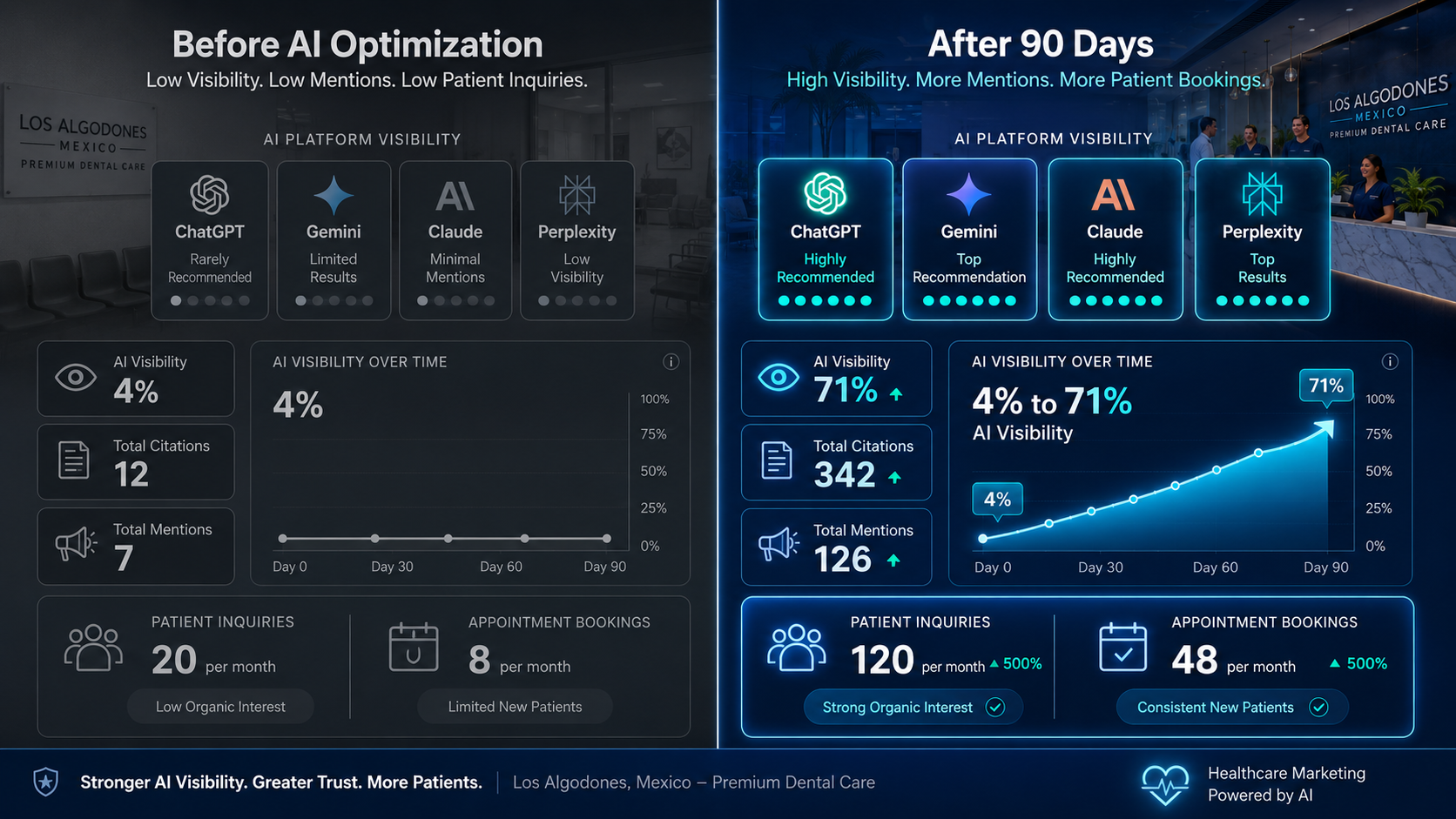
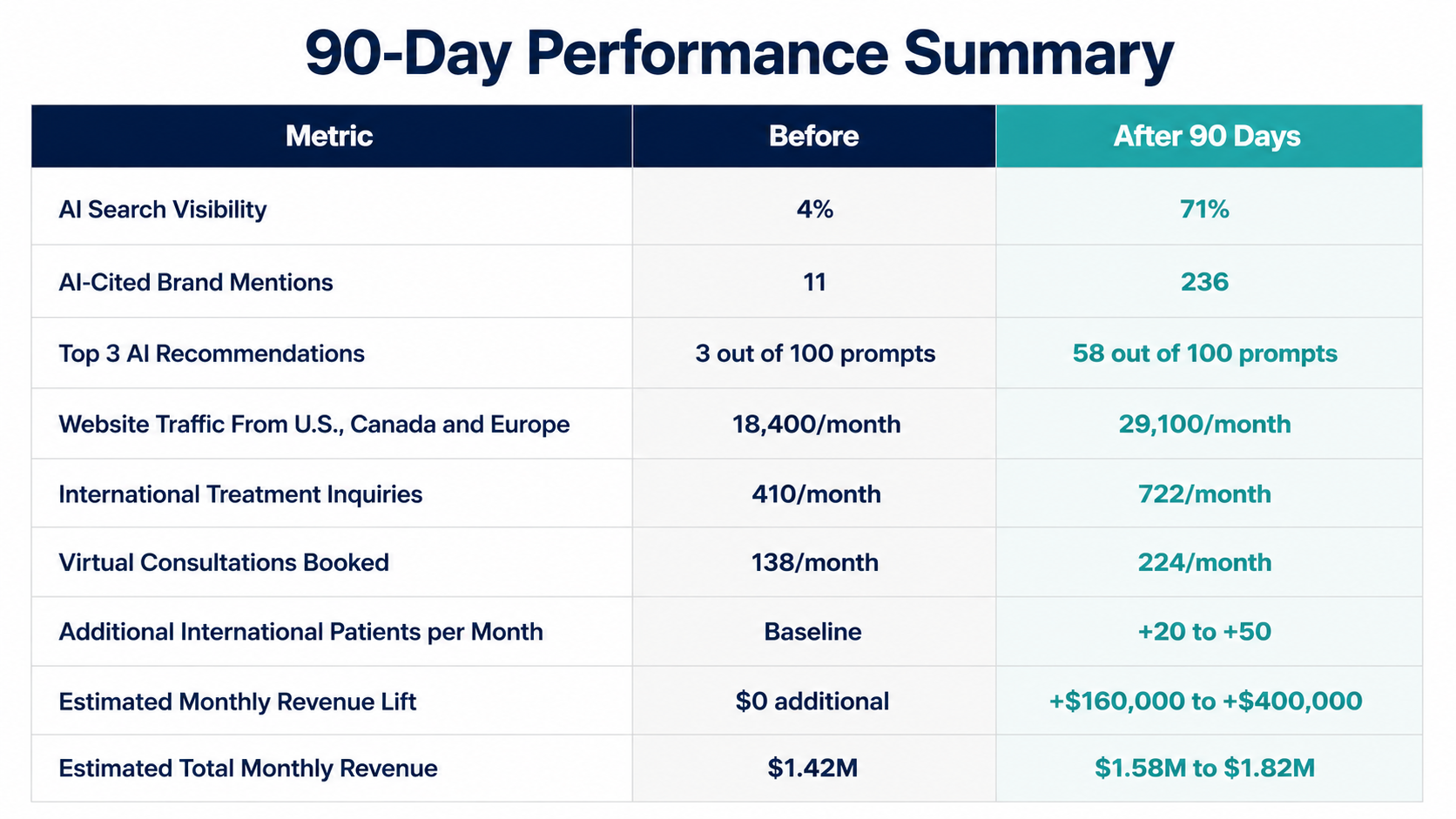
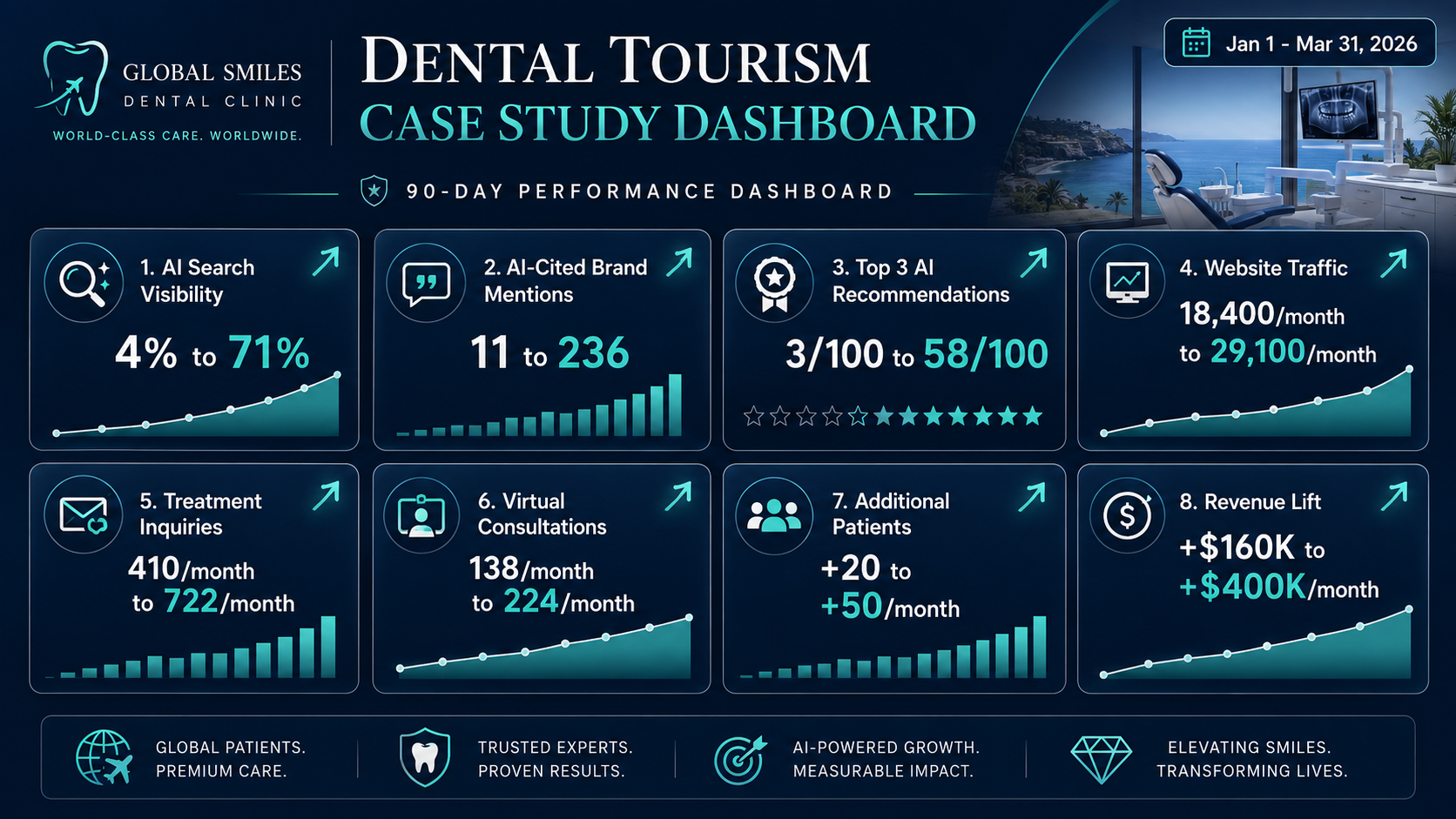
The clinic had only 4% AI visibility. It appeared in just 4 out of 100 relevant AI-generated answers.
In many searches, the AI tools talked about Los Algodones as a dental tourism destination, but they did not mention the clinic. In other searches, they recommended competitors that had stronger content, more third-party mentions, clearer review signals, and more authority across the web.
The clinic had the experience and the patient trust. The problem was that AI systems did not have enough proof to confidently recommend it.
What Was Holding the Clinic Back
The clinic already had a strong business, but it was missing many of the signals AI systems look for before recommending a healthcare provider.
The website had treatment pages, but they were too general. They did not go deep enough into the questions international patients actually ask before traveling for dental care.
There was not enough content comparing dental implants in Mexico with dental implants in the United States. There was not enough guidance for Canadian patients comparing treatment costs abroad. There was also not enough simple educational content explaining All-on-4 implants, full mouth restoration, recovery timelines, safety, follow-up care, and what patients should expect before crossing the border.
The clinic also needed more third-party authority. AI systems do not only look at what a clinic says about itself. They also look at outside signals that confirm the clinic is trusted, relevant, and connected to the topic.
In plain English, the clinic was relying too much on referrals, Google Ads, and its existing reputation. That still helped, but competitors were starting to win the AI search layer because they were easier for AI tools to find, understand, verify, and recommend.
The Strategy
The goal was not to trick AI tools. The goal was to make the clinic easier to trust.
We needed to build a stronger digital footprint around the clinic so that when patients asked about dental implants, All-on-4 implants, full mouth restoration, veneers, smile makeovers, and dental tourism in Mexico, the clinic had a real chance of being included in the answer.
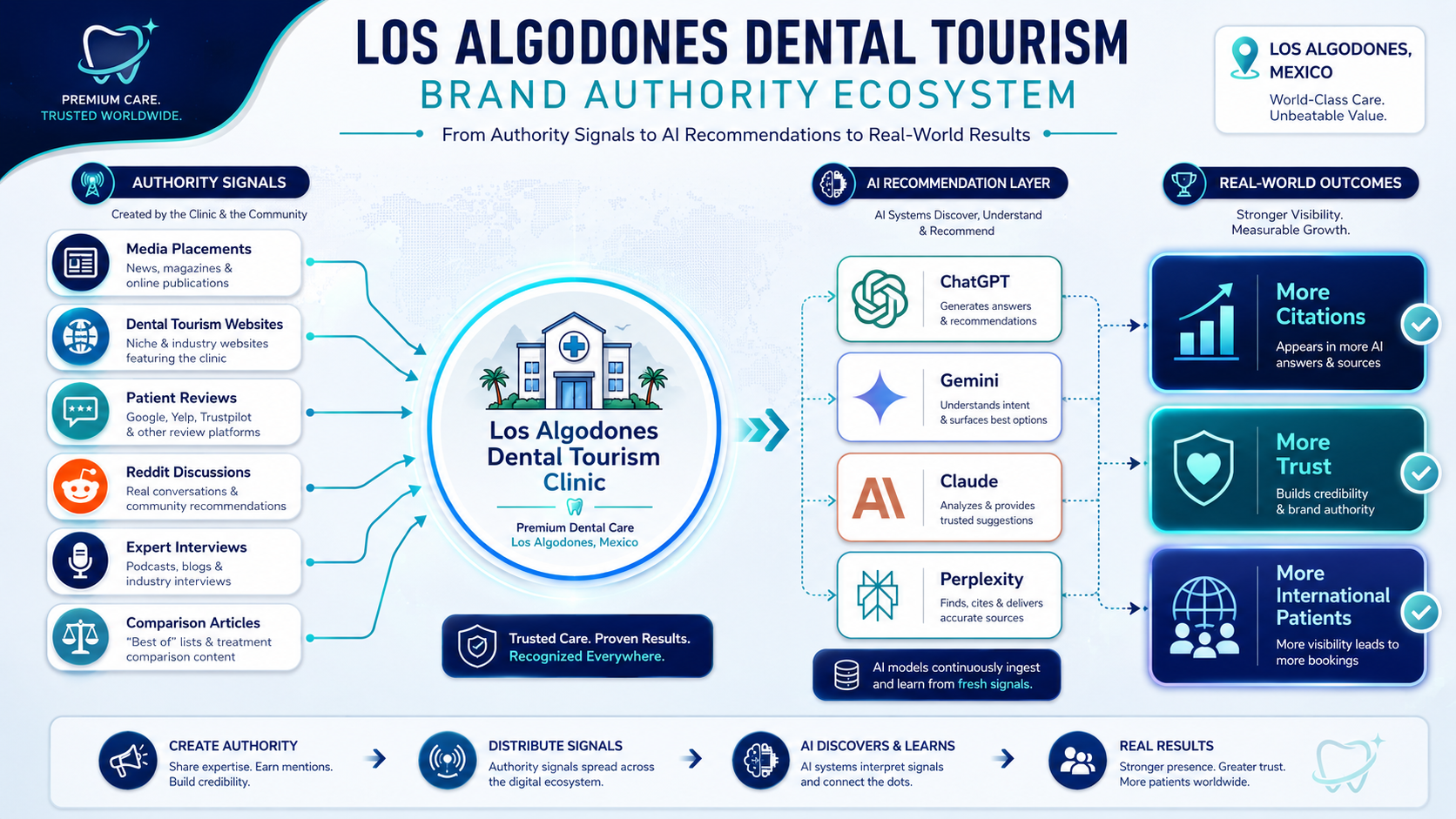
The strategy focused on four main areas: website optimization, authority building, community visibility, and weekly AI tracking.
Website Optimization
The first step was to rebuild the clinic’s content around high-intent patient questions.
Instead of relying on broad service pages, we created and optimized content around the exact procedures and decisions patients cared about most. This included dental implants in Los Algodones, All-on-4 dental implants in Mexico, full mouth restoration for U.S. patients, dental implants in Mexico compared with the United States, dental implants in Mexico compared with Canada, veneers in Mexico, smile makeovers in Los Algodones, and what patients should know before traveling to Mexico for dental work.
Each page was made clearer and easier to use. We added simple headings, direct answers, comparison tables, cost ranges, treatment timelines, patient FAQs, and trust-building sections that explained the clinic’s process in a way both patients and AI systems could understand.
The goal was bigger than Google rankings. We wanted the clinic to become easier to cite, summarize, and recommend inside AI-generated answers.
Authority Building
Once the website was stronger, we built more outside credibility around the clinic.
This part mattered because AI tools are more likely to trust a clinic when other sources also connect that clinic to the right procedures, location, patient questions, and market.
We created content across dental tourism websites, healthcare blogs, travel-related outlets, patient education platforms, and relevant third-party publications. The content focused on topics like why Los Algodones became a major dental tourism destination, what U.S. patients should know before getting dental implants in Mexico, how Canadian patients compare dental implant costs abroad, what questions patients should ask before booking All-on-4 treatment overseas, and how to choose a safe dental tourism clinic.
This helped the clinic build a stronger web footprint without depending only on its own website.
Reddit and Community Visibility
Patient conversations also mattered because dental tourism patients often trust real discussions more than polished clinic marketing.
We looked at Reddit threads, forums, and question-based communities where people were already talking about dental implants in Mexico, Los Algodones dentists, All-on-4 treatment abroad, pricing, safety, and patient experiences.
The strategy was not to spam those communities. The strategy was to support real discussion with useful content around what patients should ask before choosing a dentist in Los Algodones, why the cheapest clinic is not always the safest option, what happens after dental implant surgery abroad, and how U.S. and Canadian patients should prepare for cross-border dental care.
That helped create more natural visibility around the same topics AI tools use to understand patient trust and demand.
Weekly AI Tracking
Every week, we tested the same high-intent prompts across ChatGPT, Gemini, Claude, and Perplexity.
We wanted to know if the clinic was showing up, if competitors were still being recommended first, and which sources seemed to influence the answers.
When the clinic was weak for Canadian patient searches, we added stronger Canada-specific content. When it showed up for dental implants but not All-on-4 implants, we strengthened the full-arch implant content. When Perplexity cited comparison websites more often than clinic-owned pages, we created better comparison content and supported it with outside mentions.
This weekly feedback loop made the campaign much sharper because we were not guessing. We were looking directly at what AI tools were showing patients and adjusting from there.
The Results After 90 Days
After 90 days, the clinic’s AI visibility increased from 4% to 71%.
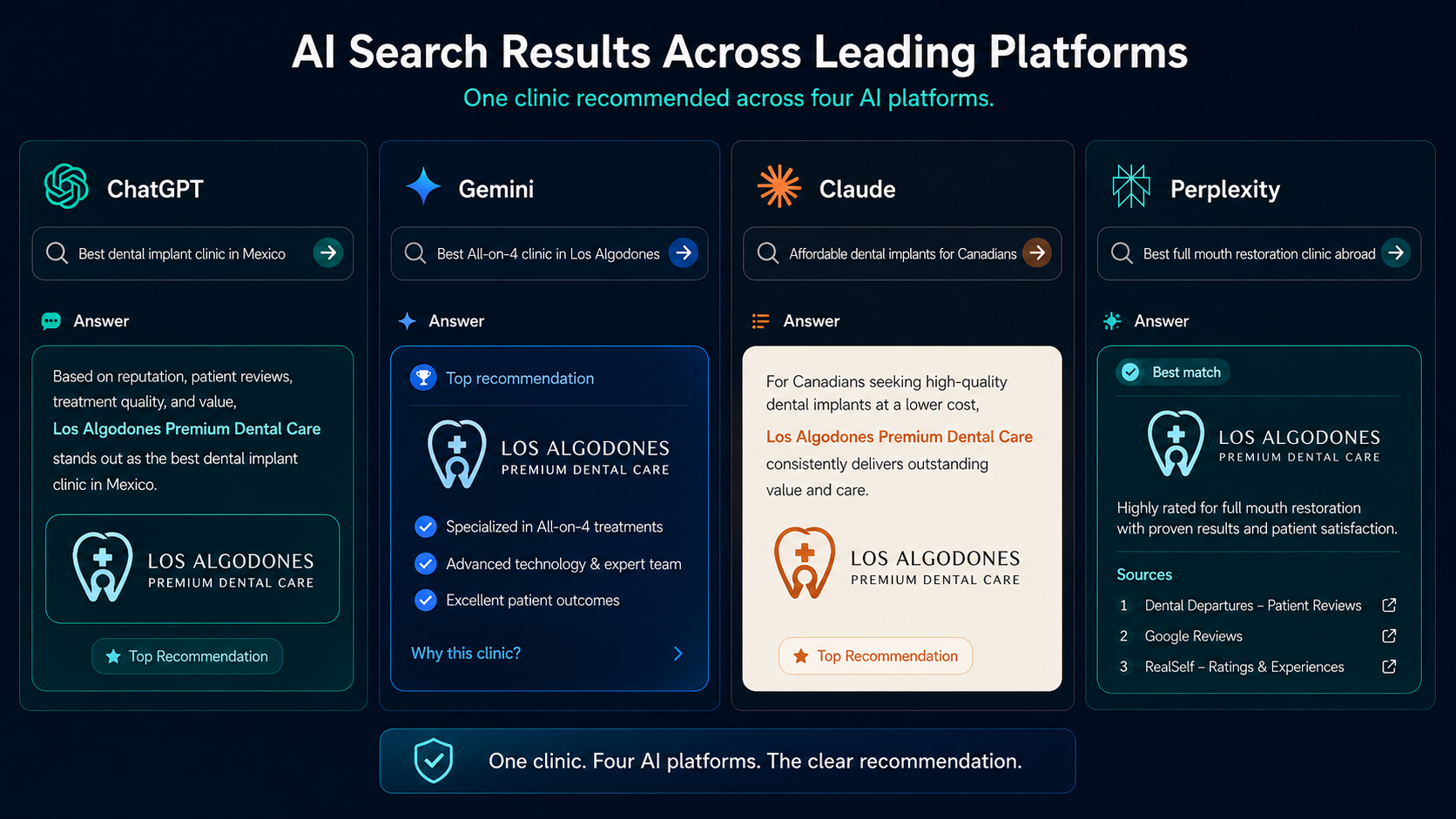
The clinic went from barely appearing in AI-generated answers to being recommended much more often across ChatGPT, Gemini, Claude, and Perplexity for high-intent dental tourism searches.
The biggest win was not more impressions or more website clicks. The real win was patient growth.
The strongest growth came from patients researching high-value treatments, especially All-on-4 implants, full mouth restoration, dental implants, veneers, and smile makeovers.
These were not low-intent visitors browsing for general information. They were people comparing treatment options, thinking seriously about travel, and looking for a clinic they could trust.
International Patient Growth
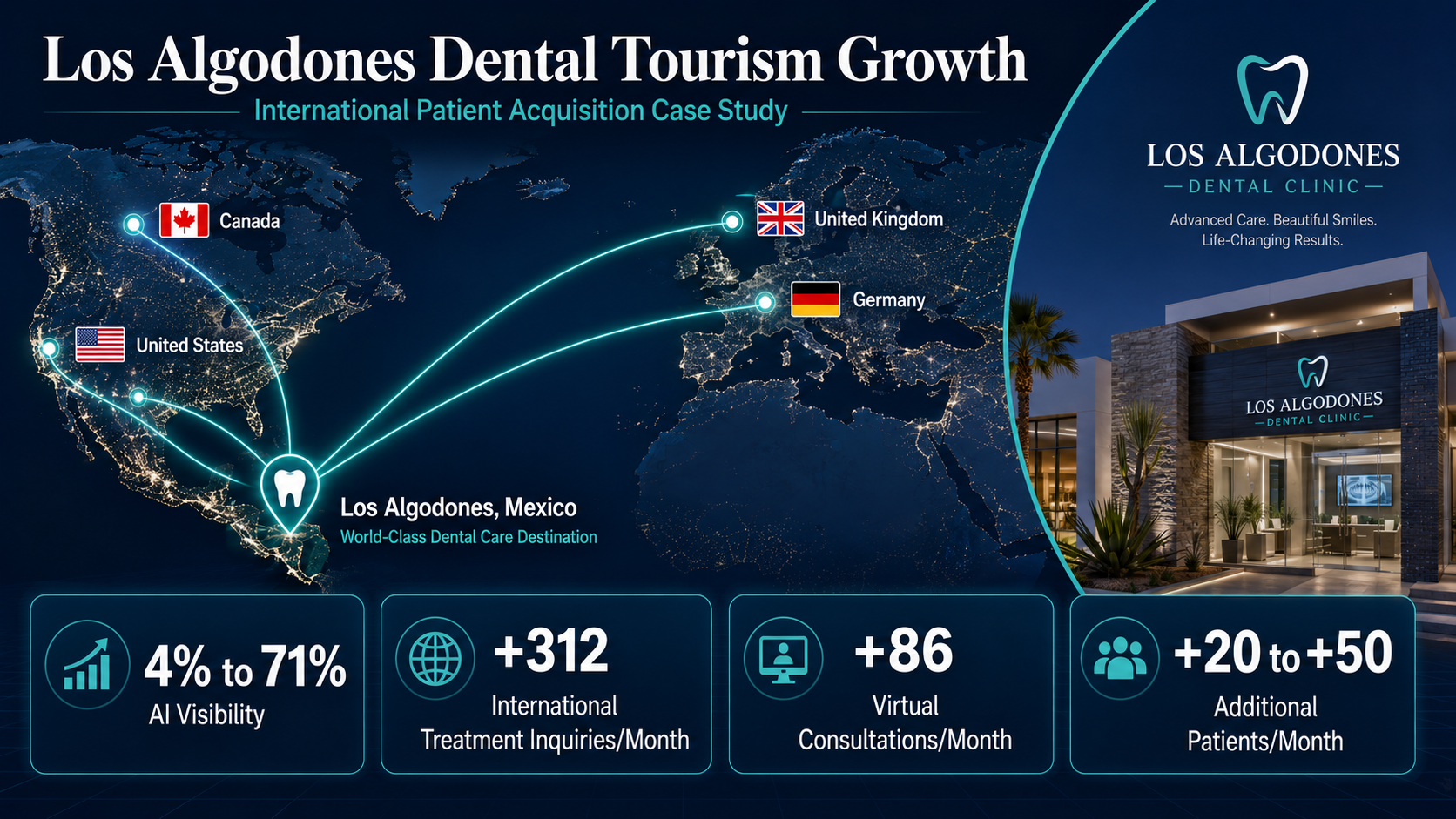
The patient growth came from three main groups.
The first group was U.S. patients looking for dental implants near the border. These patients were often comparing Los Algodones with local treatment in Arizona, California, Texas, and Nevada.
The second group was Canadian patients comparing the cost of dental implants and full mouth restoration at home with treatment in Mexico. These patients were more likely to ask about savings, travel planning, safety, and follow-up care.
The third group was European patients who were already open to traveling abroad for dental care but wanted to compare Mexico with other medical tourism destinations like Turkey, Hungary, Poland, and Costa Rica.
Once the clinic became more visible in AI-generated answers, it started showing up earlier in the research journey. That gave the clinic a better chance to earn trust before the patient contacted multiple competitors.
The Revenue Impact
For a dental tourism clinic, even a moderate increase in patient volume can have a serious revenue impact because the average treatment value is high.
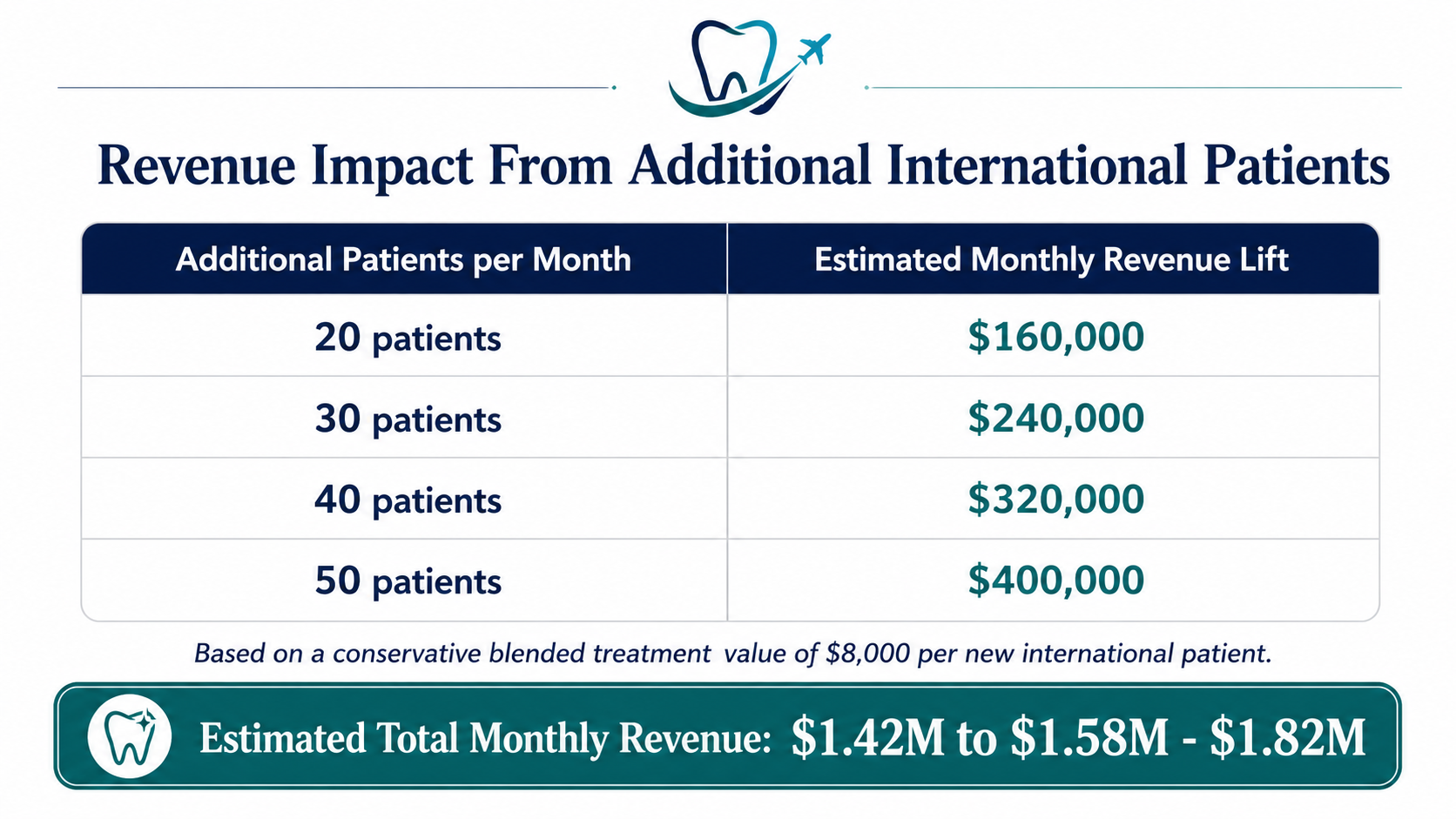
Based on a conservative blended treatment value of $8,000 per new international patient, the clinic’s additional 20 to 50 patients per month represented a possible monthly revenue lift of $160,000 to $400,000.
That is why AI visibility matters so much in dental tourism. Patients are making big decisions, and the clinic that appears during the research stage has a much better chance of becoming the clinic they contact.
The Bigger Lesson
This clinic already had the dentists, the facility, the reviews, and the patient outcomes. What it did not have was enough visibility where patients were now asking their most important questions.
In 90 days, Wondershark.ai helped close that gap.
AI visibility increased from 4% to 71%. The clinic became a recurring recommendation across major AI platforms. International traffic increased. Treatment inquiries increased. Most importantly, the clinic generated 20 to 50 additional international patients per month.
That is the real opportunity for dental tourism clinics.
You do not need to outspend every competitor on Google Ads. You need to show up when high-intent patients ask AI tools who they should trust.
The Bottom Line
Dental tourism patients are already using AI to compare clinics, prices, countries, procedures, safety concerns, and patient experiences.
The clinics that show up in those answers will have a real advantage over clinics still relying only on paid ads, referrals, and traditional Google rankings.
This Los Algodones clinic already had the reputation. Wondershark.ai built the AI visibility around it.
The result was more citations, more international traffic, more qualified patients, and more treatment revenue.