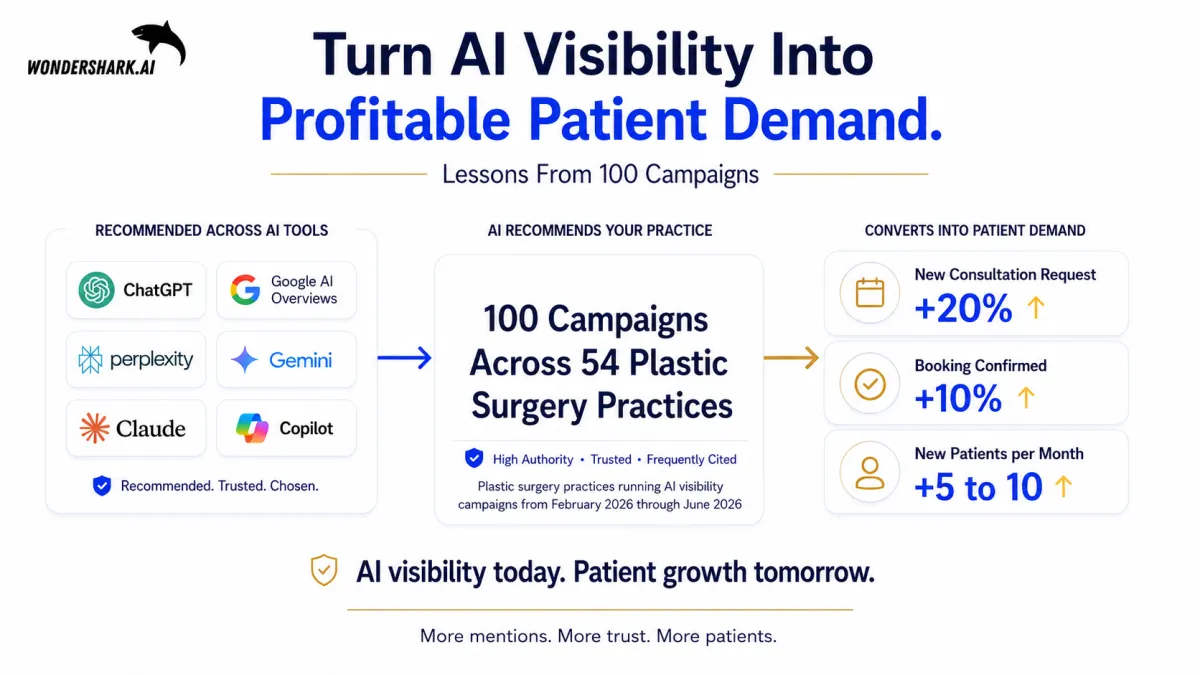
Part 1: How to Make AI Visibility Profitable for a Plastic Surgery Practice: Lessons From 100 Campaigns
My name is Marc Duquette, CEO of Wondershark.ai, and if you want to see where your clinic shows up when patients ask ChatGPT, Gemini, Claude, or Perplexity for trusted medical practice recommendations,I can show you.
This is Part 1 of a two-part post. To read Part 2, click the link below.
Part 2: How We Helped a Seattle Plastic Surgery Clinic Go From 0% to 62% AI Search Visibility in 90 Days, and Generate 5 to 10 Additional Patients per Month
Plastic surgery patients are no longer only searching on Google.
They are asking ChatGPT, Gemini, Perplexity, Claude, Google AI Overviews, and other AI tools questions like:
“Who is the best facelift surgeon near me?”
“Which plastic surgeon should I trust for a mommy makeover?”
“What is the safest option for rhinoplasty in New York?”
“Which clinic offers natural-looking breast augmentation?”
“What is better after weight loss: tummy tuck, body lift, or liposuction?”
This is a major shift in patient acquisition.
For years, plastic surgeons competed for Google rankings, map pack visibility, paid search leads, and social media attention. Those channels still matter. But the patient journey is changing. A growing number of patients now use AI tools to compare surgeons, understand procedures, evaluate risks, and decide who deserves their trust.
That creates a new problem for plastic surgery practices.
If your competitors are being recommended by AI tools and your practice is missing from those answers, you may be losing patients before they ever visit your website.
This is where AI visibility becomes important.
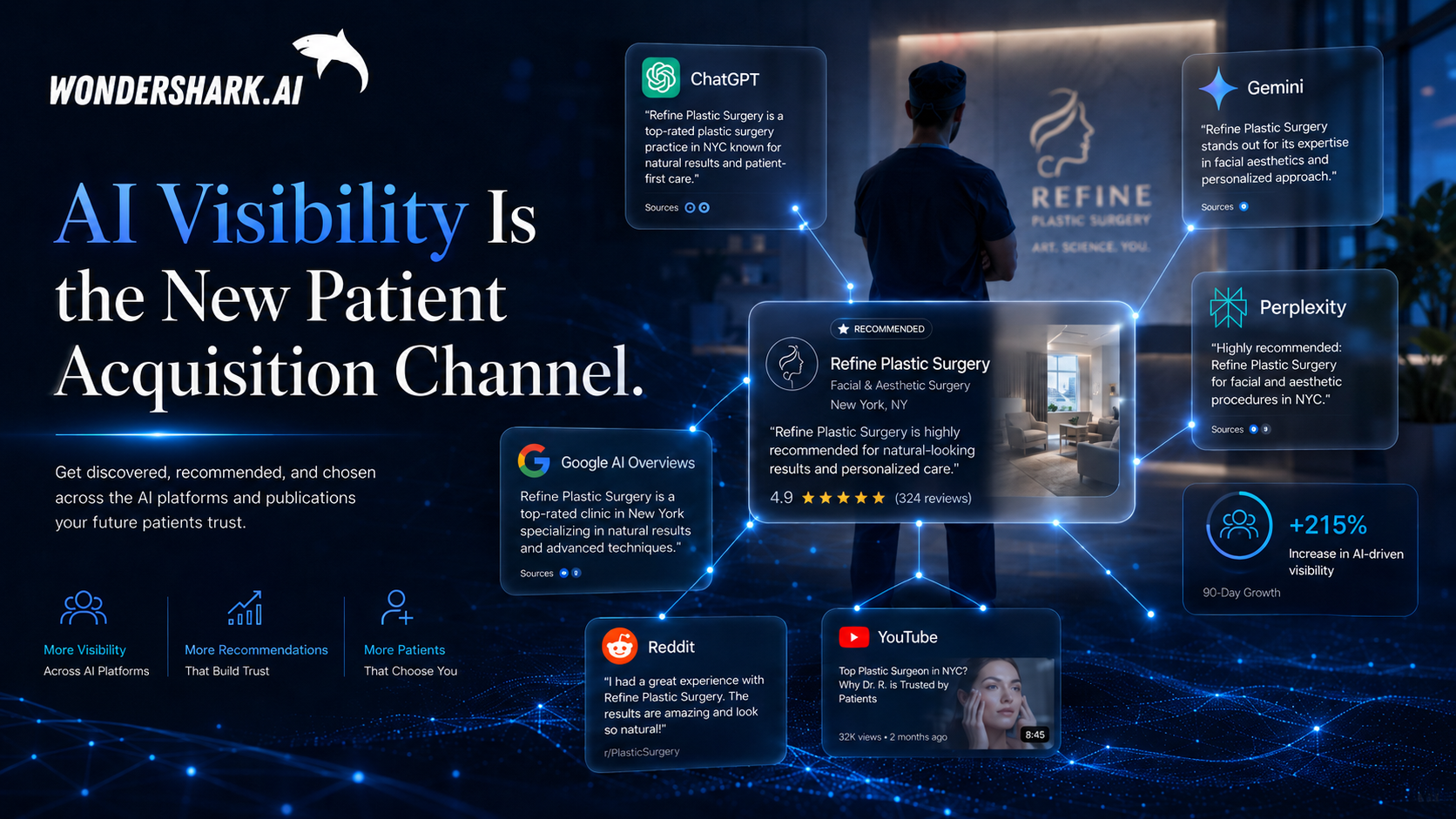
AI visibility is not just about being mentioned by ChatGPT or showing up in an AI Overview. It is about making your practice easier for AI systems to discover, understand, trust, and recommend when patients ask high-intent questions.
At Wondershark.ai, we help plastic surgery practices build this visibility across AI search, Google, third-party publications, Reddit, social platforms, and other online sources that influence what AI systems cite.
The goal is not vanity visibility.
The goal is profitable patient demand.
Why Plastic Surgery Discovery Has Fragmented
The patient journey is no longer linear.
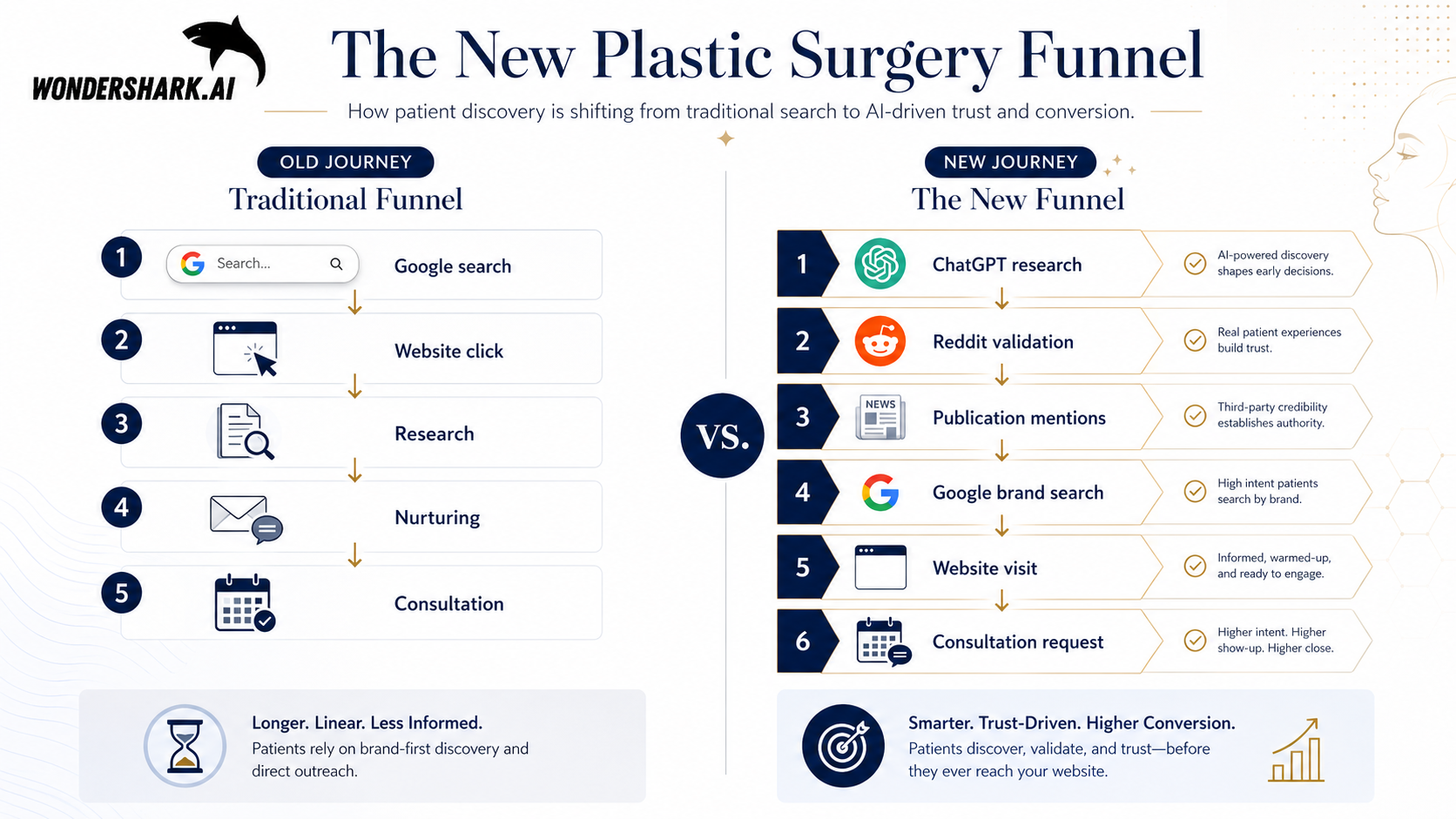
A patient researching facial rejuvenation may start on Google, then ask ChatGPT about facelift options, check Reddit for recovery stories, watch YouTube videos, read beauty publication articles, look at Instagram, and finally search the surgeon’s name before booking.
By the time that patient lands on your website, they may already have a shortlist.
This means your practice must be visible across the places where trust is built before the click.
For plastic surgeons, this is especially important because patients do heavy research before making a decision. They are not buying a low-cost product. They are considering a personal, emotional, and often expensive medical procedure.
They want reassurance.
They want safety.
They want expertise.
They want to know the surgeon understands their exact concern.
That may be aging in the lower face, a post-pregnancy body change, loose skin after weight loss, revision rhinoplasty, breast implant replacement, gynecomastia, or nonsurgical facial balancing.
AI tools are becoming part of that decision process.
And when AI systems summarize the market, they often mention only a small number of surgeons or clinics. If your practice is not part of that shortlist, you are invisible during a key decision moment.
The Three Layers Plastic Surgeons Need to Build
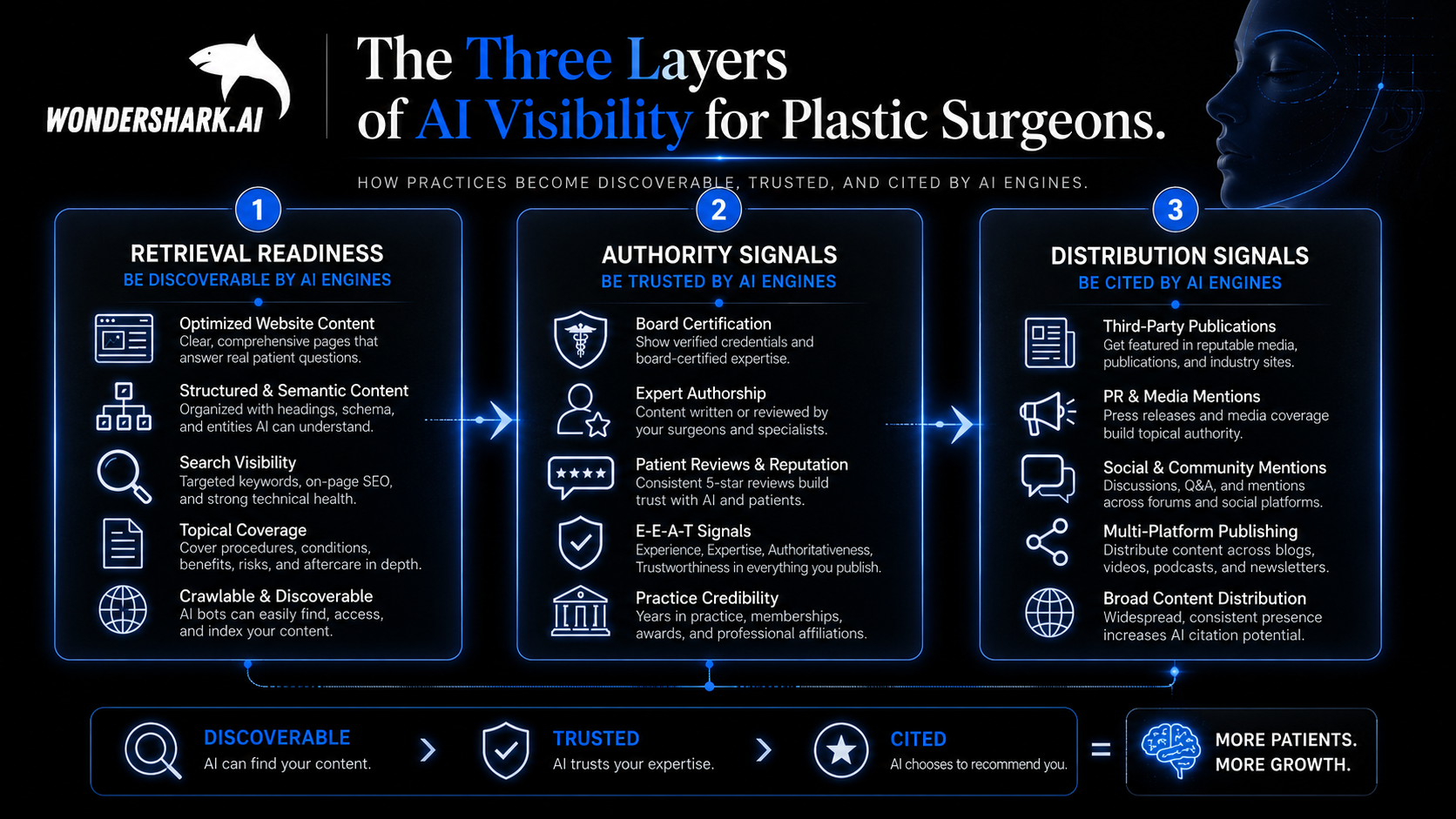
A strong AI visibility strategy has three layers.
1. Retrieval readiness
Your content must be easy for AI systems to extract.
This means clear answers, concise formatting, strong headings, FAQ sections, schema, internal links, procedure-specific pages, and content written around real patient questions.
A weak page says:
“Facelift surgery can help patients look refreshed.”
A stronger AI-ready page says:
“A facelift is a surgical procedure designed to improve visible signs of aging in the lower face and neck. Patients often consider it for jowls, loose neck skin, deep folds, or loss of jawline definition. The best candidates are healthy adults with realistic expectations and skin laxity that cannot be fully corrected with nonsurgical treatments.”
The second version is easier for AI to understand, summarize, and cite.
It is also more helpful for patients.
2. Authority signals
AI systems look for proof that other sources trust you.
For plastic surgeons, this can include:
press mentions
medical expert quotes
interviews
third-party profiles
patient reviews
academic credentials
awards
memberships
credible references from relevant websites
Your website can say you are excellent.
But AI is more likely to trust that claim when other sources support it.
3. Distribution signals
Publishing only on your own website is not enough.
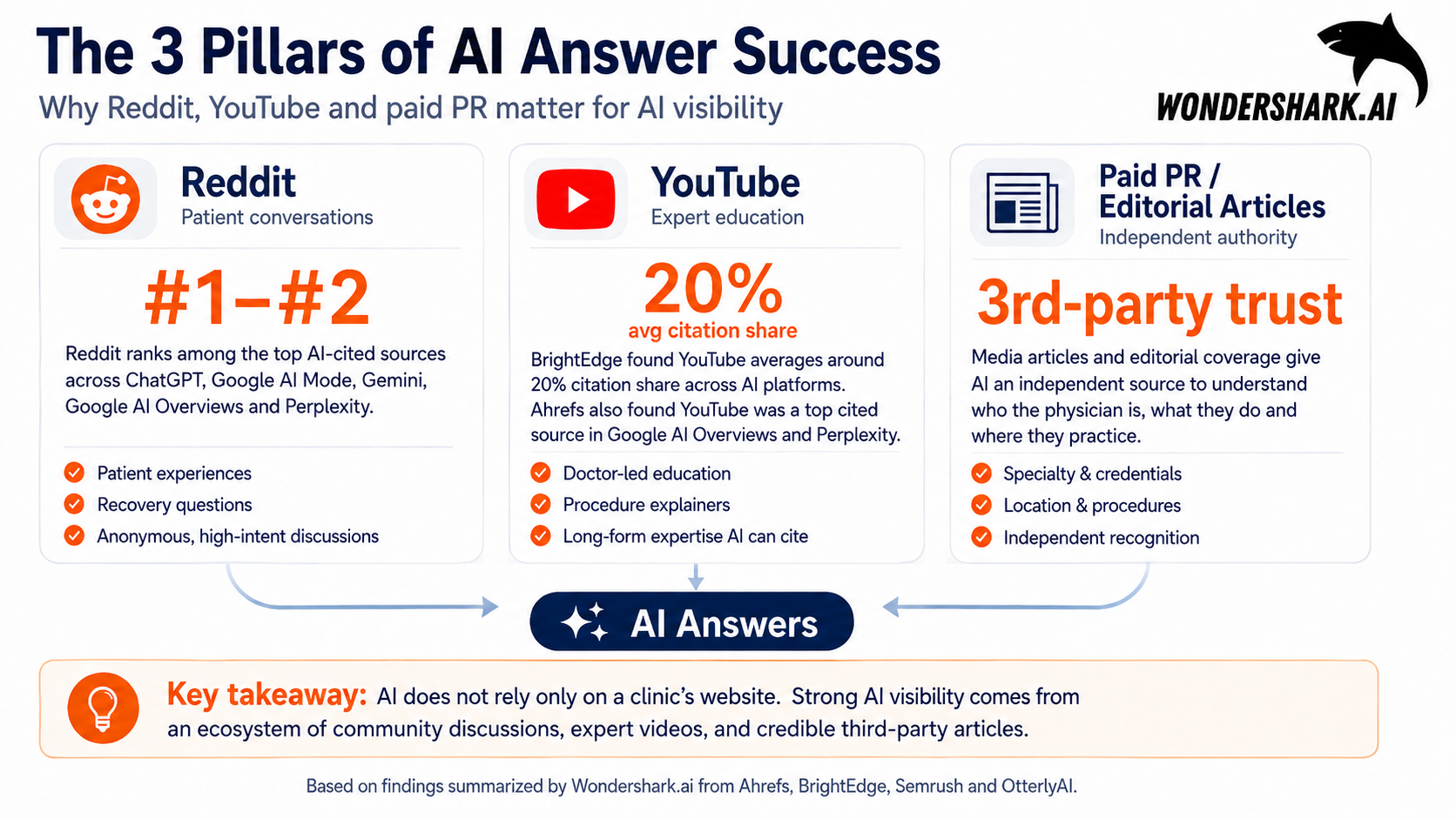
Your content should exist across multiple ecosystems, including Google, YouTube, LinkedIn, Reddit, local publications, beauty publications, medical blogs, podcasts, and relevant social platforms.
AI systems are trained on and connected to the open web.
If your practice only exists on your own domain, you are limiting what AI can discover.
The 80/20 Rule of AI Visibility
Your website matters.
But it is not the whole story.
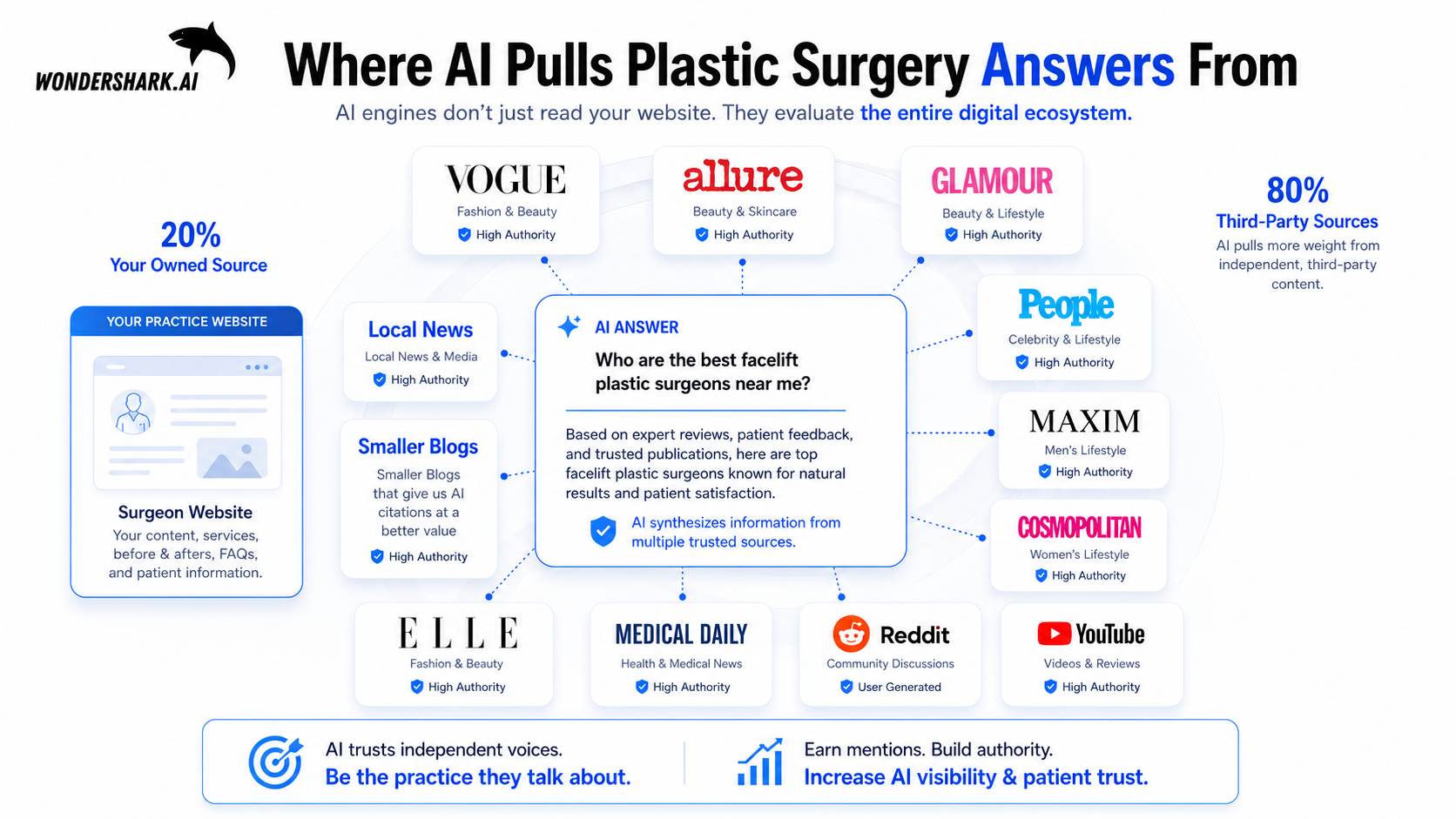
A large share of what AI systems reference comes from third-party sources outside your website.
For plastic surgeons, those sources may include:
news publications
beauty and lifestyle publications
medical blogs
expert interviews
Reddit discussions
YouTube videos
review platforms
local business profiles
social content
third-party directories
This is why blog posts alone are not enough.
You need an entity-building strategy.
That means your surgeon name, practice name, city, procedures, credentials, and expertise should be consistently reinforced across the web.
For example, a plastic surgeon in New York who wants to be known for facelifts should not only publish facelift content on their own website.
They should also appear in third-party articles about facial rejuvenation, expert quote placements, local features, patient safety guides, recovery explainers, and social content that reinforces the same topic.
The more trusted sources associate that surgeon with facelift expertise, the easier it becomes for AI systems to understand and recommend them.
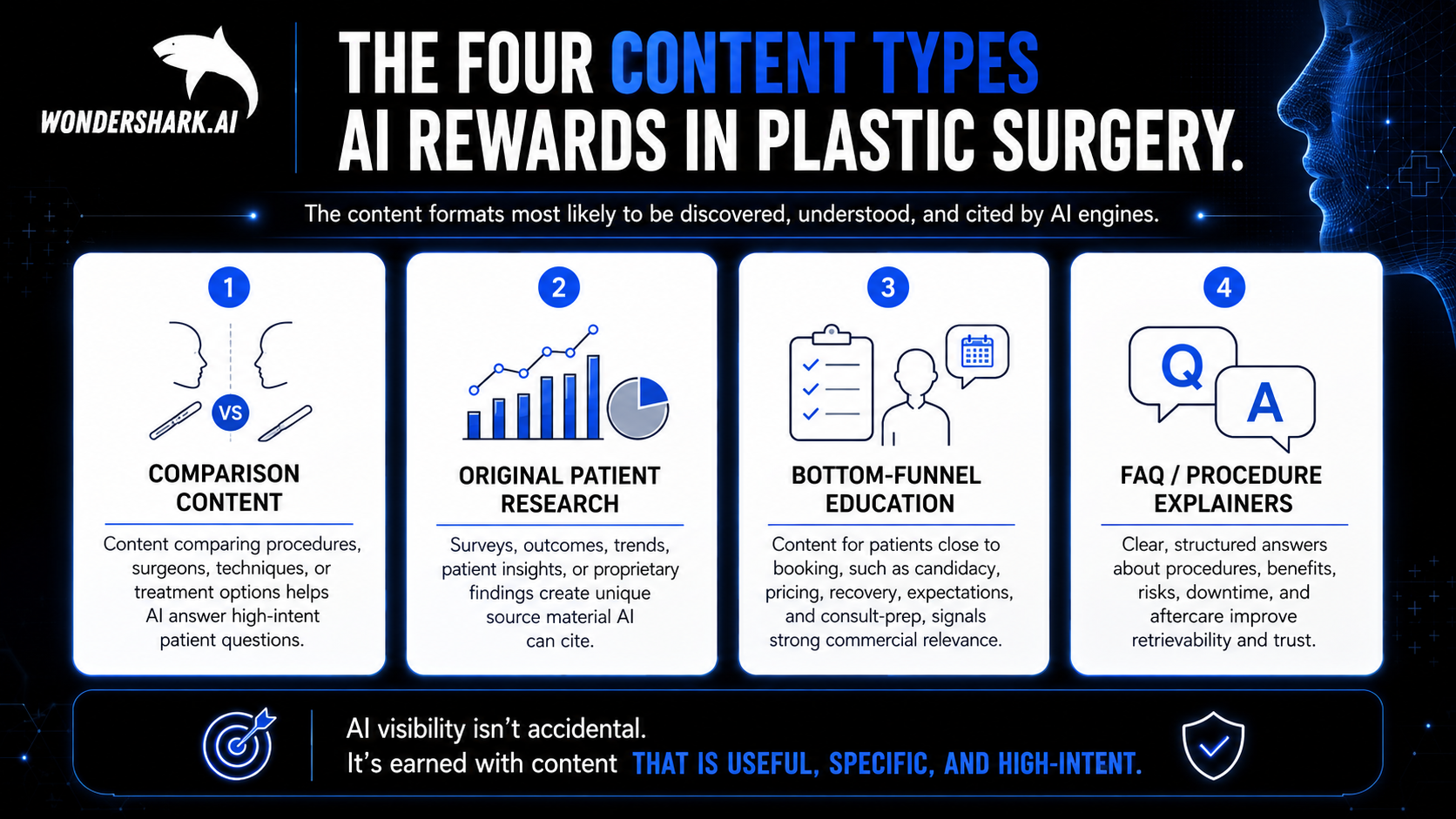
The Four Content Types That Move AI Visibility
For plastic surgeons, four types of content are especially valuable.
1. Comparison and alternative content
AI tools love answering comparison questions.
Patients ask:
“Facelift vs neck lift: which one do I need?”
“Tummy tuck vs liposuction after weight loss”
“Breast lift vs breast augmentation”
“Surgical rhinoplasty vs nonsurgical nose job”
“Deep plane facelift vs SMAS facelift”
“Mommy makeover vs separate procedures”
These are high-intent questions because the patient is already comparing options.
If your practice does not answer these questions, AI may use competitors or third-party sources instead.
2. First-party research and original data
AI systems reward unique information.
Plastic surgery practices can create original insights from anonymized patient questions, consultation trends, surveys, or internal data.
Examples:
“The Most Common Questions Patients Ask Before a Facelift Consultation”
“What Post-Weight-Loss Patients Want to Know Before Body Contouring”
“Top Concerns Men Have Before Considering Gynecomastia Surgery”
“What Patients Misunderstand About Rhinoplasty Recovery”
This type of content can become citation-worthy because it gives AI and publishers something original to reference.
3. Bottom-funnel education
Patients use AI when they are close to making a decision.
Bottom-funnel content answers questions like:
“How do I choose the best facelift surgeon?”
“What credentials should I look for in a rhinoplasty surgeon?”
“How much does a mommy makeover cost?”
“What questions should I ask during a plastic surgery consultation?”
“What makes someone a good candidate for a tummy tuck?”
These topics are closer to booking than broad educational topics like “What is plastic surgery?”
4. FAQ frameworks and procedure explainers
AI loves clear, structured answers.
Every major procedure page should include strong FAQ sections, direct answers, candidate information, recovery timelines, risks, alternatives, and decision-making guidance.
For plastic surgeons, this is not only good for AI.
It is good for patients.
The Big Takeaway
Plastic surgery marketing is entering a new phase.
Patients are not only searching.
They are asking.
They are asking AI tools who to trust, which surgeon to choose, what procedure is right for them, what risks to consider, and which practice is most credible.
That means your practice needs to be visible where those answers are formed.
Winning AI visibility requires more than blog posts.
It requires:
clear procedure content
expert authority
third-party mentions
review consistency
multi-platform distribution
original insights
conversion-focused landing pages
measurement tied to consultation demand
The winner will not be the practice with the most AI mentions.
The winner will be the practice that turns AI visibility into profitable patient demand.
That is what Wondershark.ai helps plastic surgery practices build.