How We Helped a Seattle Plastic Surgery Clinic Go From 0% to 62% AI Search Visibility in 90 Days, and Generate 5 to 10 Additional Patients per Month
My name is Marc Duquette, CEO of Wondershark.ai. If you want to see where your brand actually stands in AI-generated answers today, I can show you. Schedule a call with me or get your free 2026 AI visibility report.
This clinic didn't come to Wondershark.ai because they were failing. Their surgeon had a solid reputation, consistent five-star reviews, and a loyal patient base built over years of word-of-mouth referrals. What they had zero of was presence in AI search - and in a city as competitive as Seattle, that was becoming a real liability. New patient inquiries had plateaued. Consultation bookings were flat. And a quick test on ChatGPT and Perplexity confirmed the worst: search for the best plastic surgeons in Seattle, and this clinic didn't exist in any of the answers.
That's the problem Wondershark.ai was brought in to fix.
Your Next Patient Is Asking ChatGPT, Not Google
The way people find a plastic surgeon has changed faster than most clinics realize. It used to be Google searches, review sites, and word of mouth. That's still part of the mix - but AI tools have entered the picture in a big way, and they're moving fast.
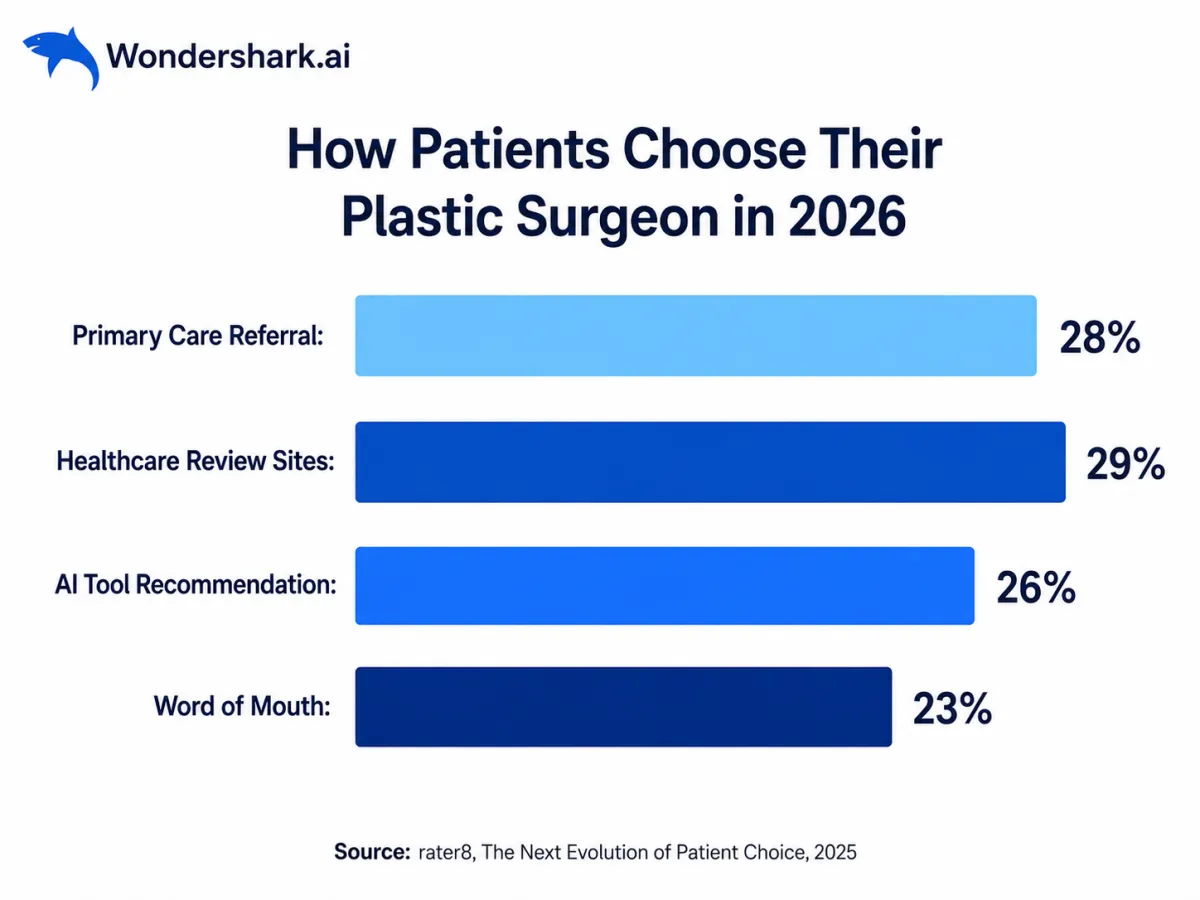
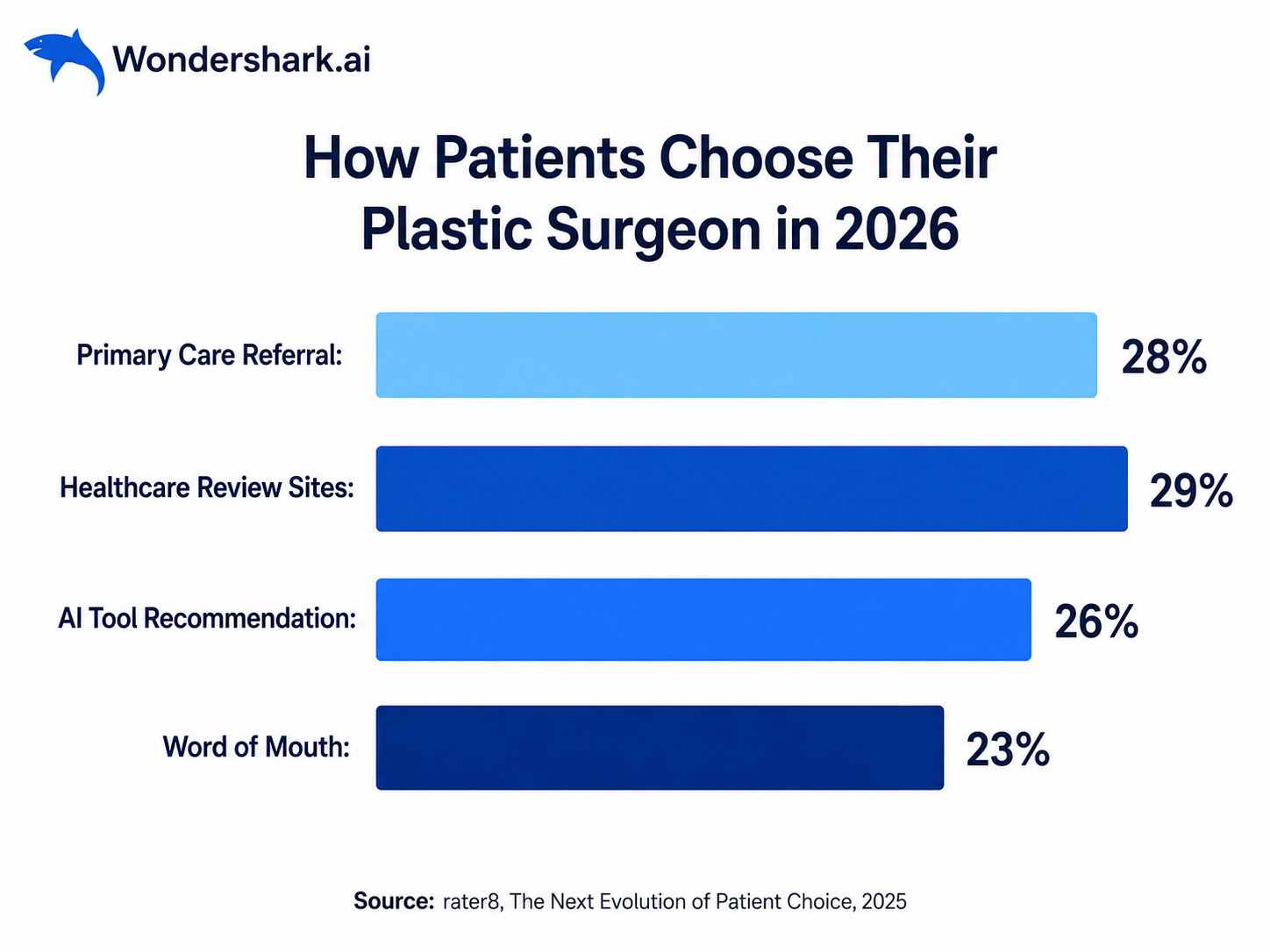
According to a June 2025 survey by rater8 of more than 1,000 U.S. adults, 70% of patients are already using or open to using AI tools to research healthcare providers. More striking is this: 26% of patients said AI tools directly influenced which provider they chose - putting AI almost level with primary care referrals at 28% and healthcare review sites at 29%. That's not a fringe behavior. That's a mainstream channel for patient acquisition, and most plastic surgery clinics aren't showing up in it at all.
The cosmetic surgery market is also growing fast. According to Straits Research, the global market hit $156 billion in 2024 and is projected to reach $420 billion by 2033. In the U.S. alone, over 18 million cosmetic procedures are performed annually. Seattle is one of the most competitive cosmetic surgery markets in the country. In that environment, showing up in AI-generated answers isn't a nice bonus - it's a real competitive edge.
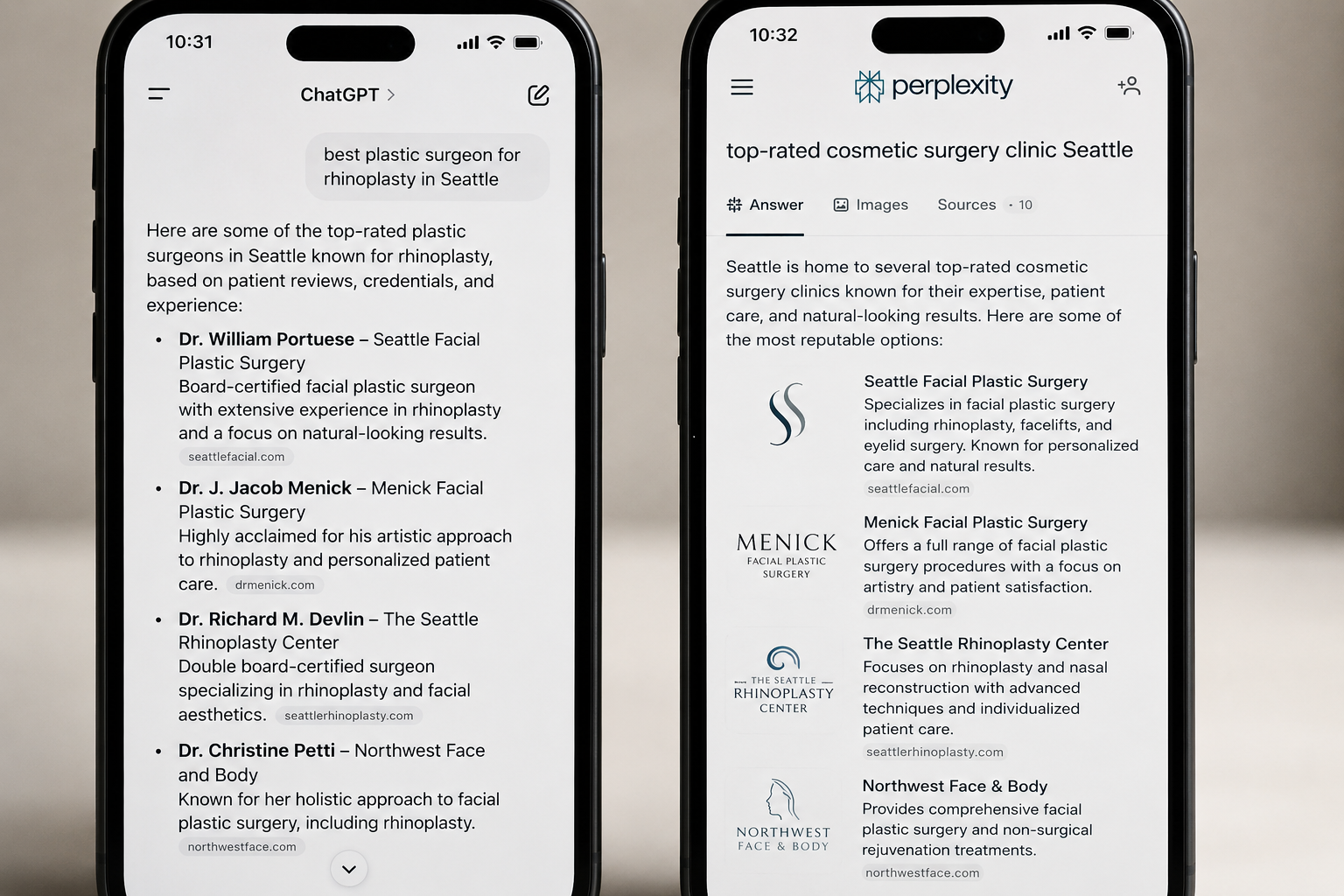
Why AI Visibility Hits Differently in Plastic Surgery
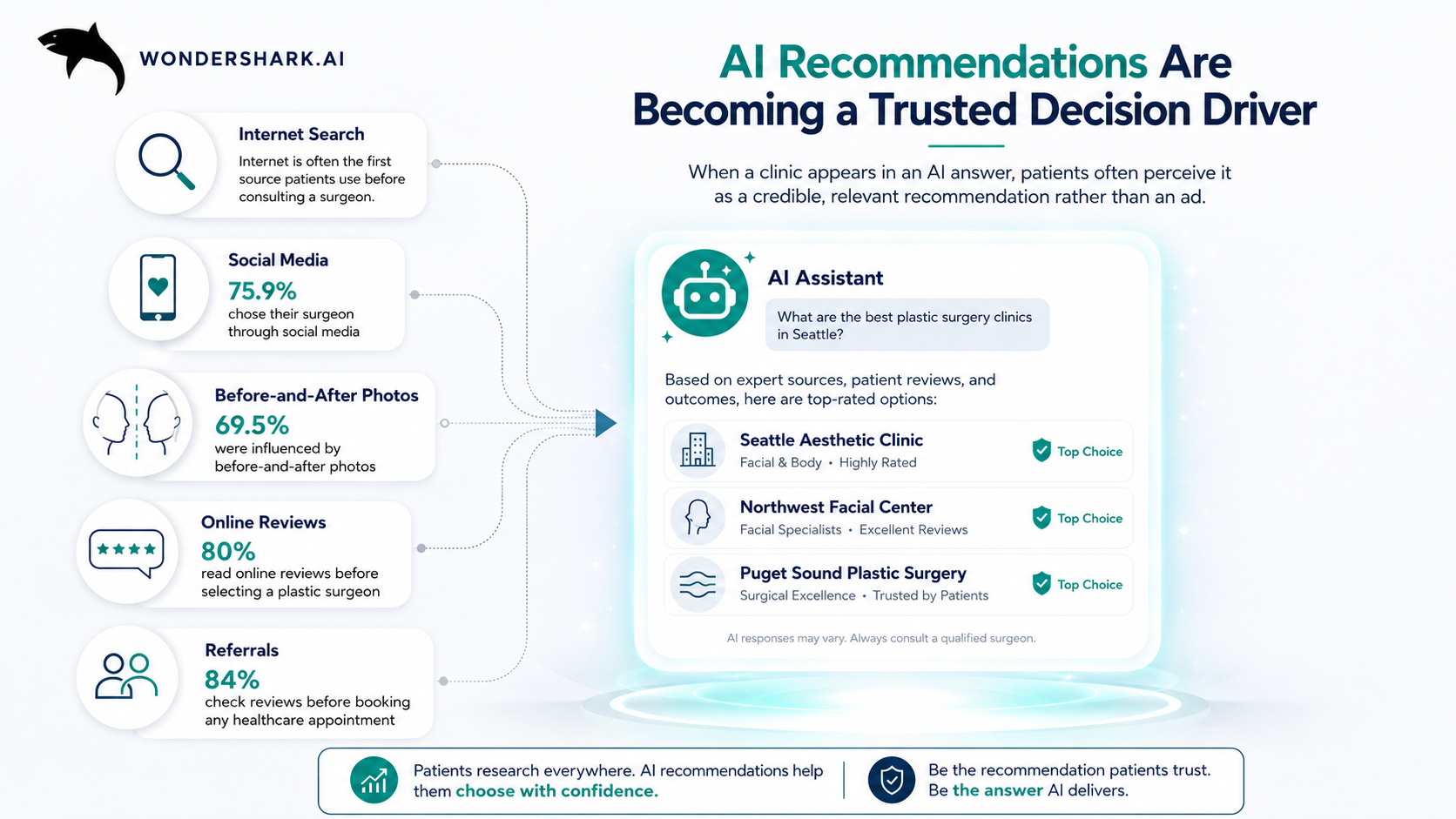
To understand why AI visibility matters so much in this space, you need to think about how plastic surgery patients actually make decisions. This is not an impulse purchase. Patients research for weeks or months before ever picking up the phone to book a consultation. They read reviews. They watch YouTube videos. They compare surgeons. They ask friends. And increasingly, they ask AI.
A 2024 study published in Cureus found that patients' most commonly used first source of information before consulting a surgeon is the internet. A separate study across 141 cosmetic surgery patients found that 75.9% chose their surgeon through social media, and 69.5% said before-and-after photos directly influenced their choice. Reviews matter too - 80% of plastic surgery patients read online reviews before selecting a surgeon, and 84% of patients check reviews before booking any healthcare appointment at all.
Here's where it gets interesting. AI recommendations are now matching the influence of both referrals and review sites. When a patient asks ChatGPT to recommend a plastic surgeon in their city and your clinic comes up in that answer, it carries a different kind of weight than a paid ad or even a five-star Google review. The AI isn't selling anything. It's not a friend with a vested interest. It's presenting what it believes is a credible, relevant answer - and patients treat it that way.
The clinics that appear in those answers consistently, across ChatGPT, Perplexity, Google AI Mode, and others, are the ones that will own new patient acquisition in this market over the next few years.
The Problem With Google and Meta Ads
Before coming to Wondershark.ai, this Seattle clinic - like most practices - was relying heavily on paid advertising to bring in new patients. Google Ads and Meta ads were the primary acquisition channels. And while they produced some results, the math was getting harder to justify.
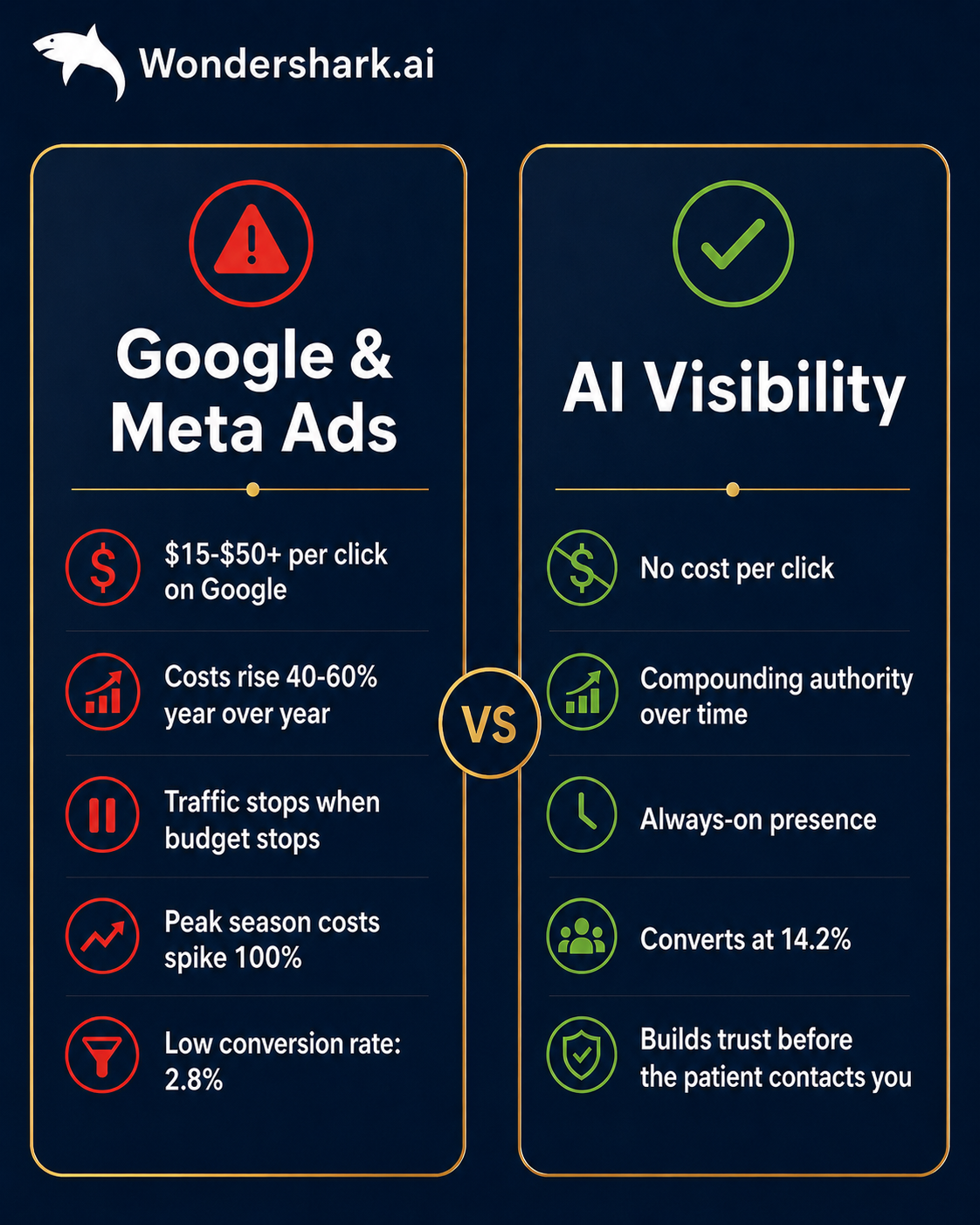
Google Ads for plastic surgery keywords cost between $15 and $50 per click, with some competitive procedure terms running even higher. In major metro markets like Seattle, New York, and Los Angeles, advertising costs run 200 to 400% above national averages. A 2025 analysis by Patient10x found that healthcare Google Ads costs have risen 40 to 60% over the past three years - and cosmetic surgery advertising costs spike an additional 50 to 100% before peak seasons like summer and the holidays, exactly when every competitor is also ramping up spend.
Meta ads follow a similar pattern. High cost per acquisition, creative fatigue, heavy reliance on visuals that need constant refreshing, and a platform that is increasingly skeptical of healthcare advertising and prone to ad account restrictions.
The core problem with both channels is that they stop the moment you stop paying. There's no compounding effect. Every month, you're starting from zero again, competing against every other clinic in the city for the same expensive keywords and the same crowded ad placements.
AI visibility works differently. Content that earns citations in AI-generated answers builds authority over time. Each citation makes the next one more likely. The clinic stops paying per click and starts building a presence that compounds - one that is there whether or not the ad budget is running.
AI search traffic also converts far better. Adobe's research shows AI-referred visitors convert at 14.2%, compared to 2.8% for Google organic search. That's a 5x conversion advantage - before even accounting for the cost difference.
What Wondershark.ai Did
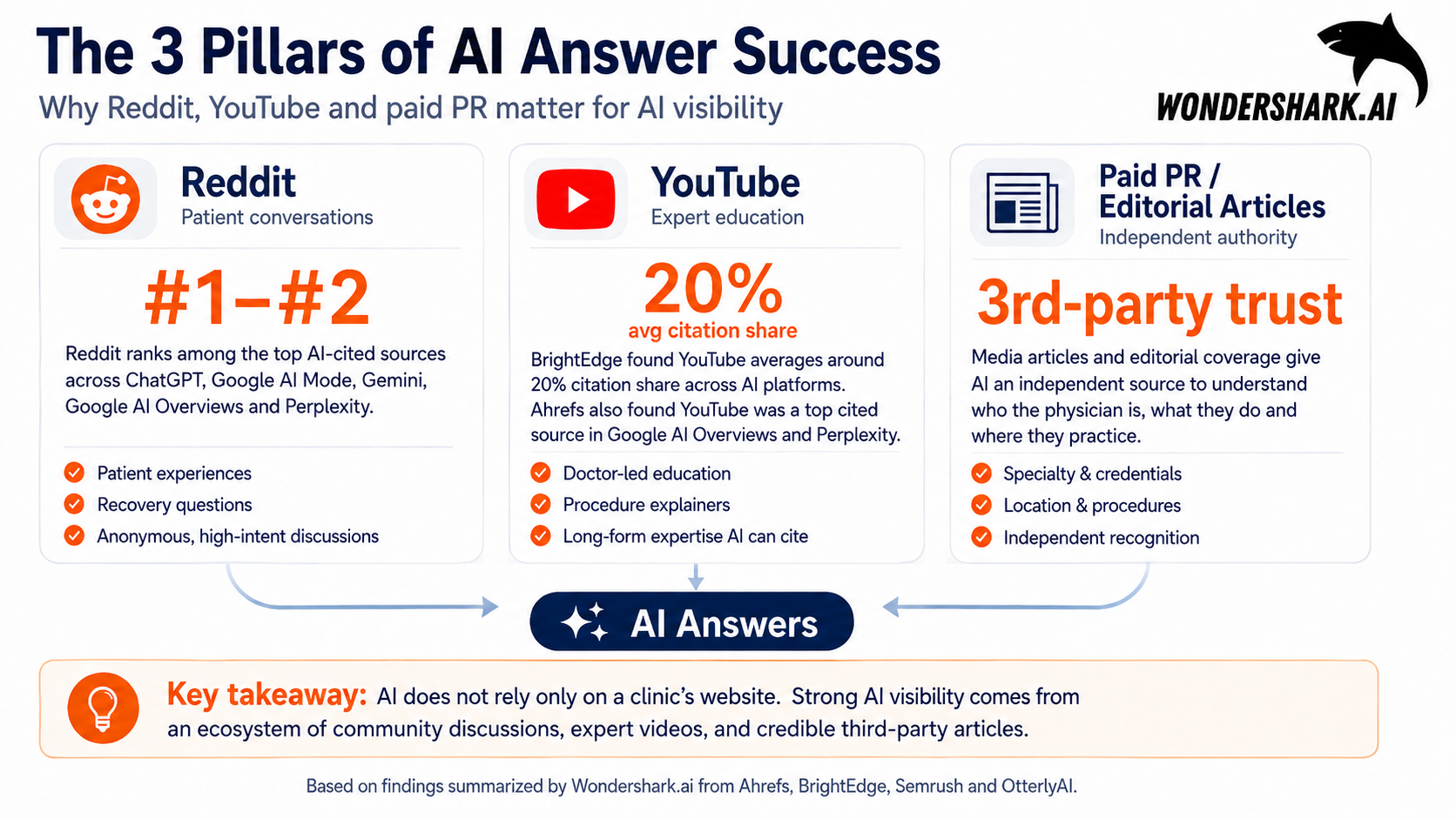
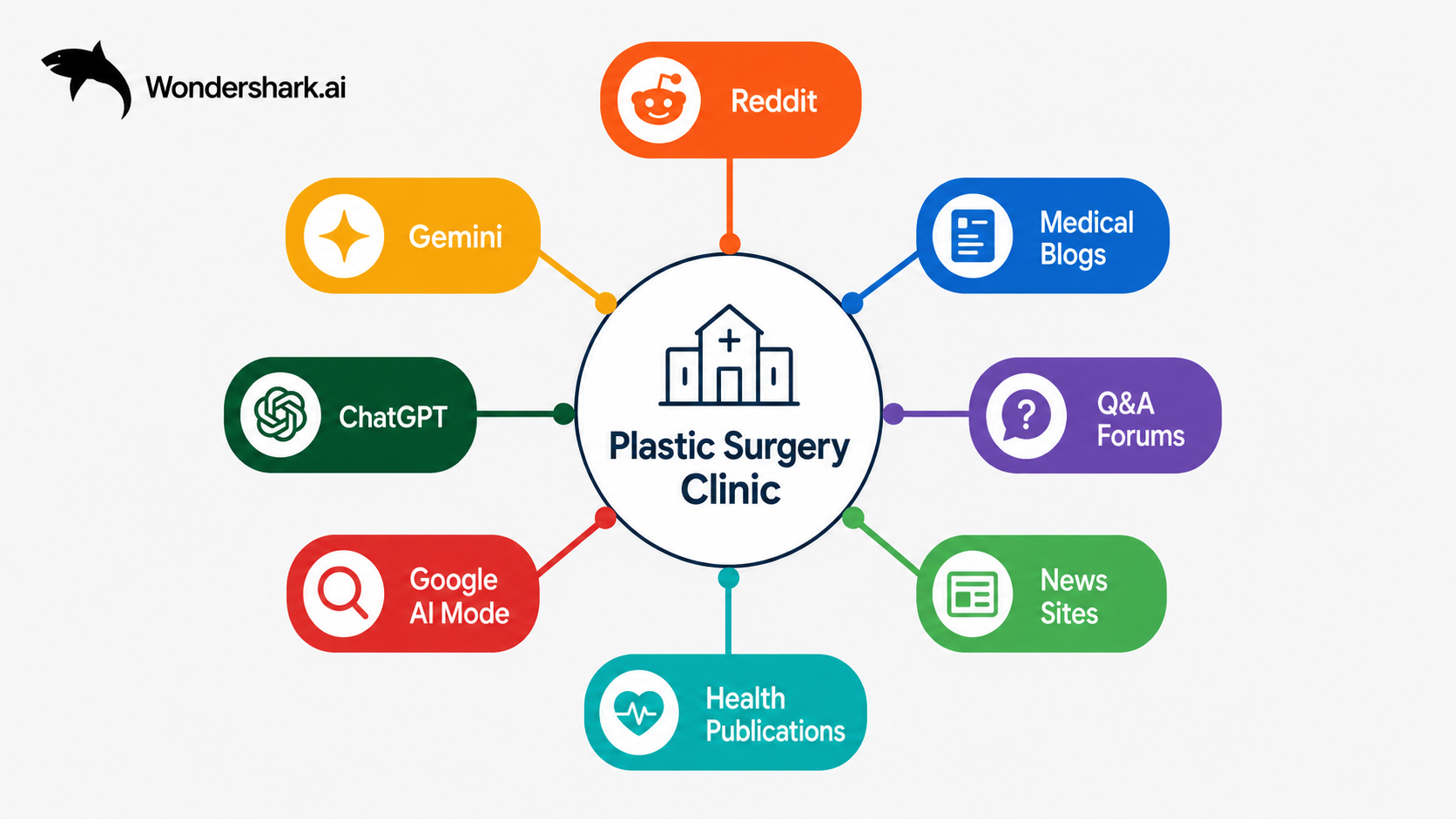
The strategy was clear in concept and intensive in execution. Wondershark.ai researched the specific questions cosmetic surgery patients in Seattle were asking AI tools - everything from "what should I look for in a rhinoplasty surgeon" to "how long is recovery from a facelift" to "best board-certified plastic surgeons in Seattle for tummy tuck." Then the team built and distributed expert content designed to answer those questions, across more than 1,300 blogs, forums, and Reddit discussions.
None of this was mass production. Every piece of content was built to meet the standard that AI models apply when deciding what to cite - authoritative, specific, genuinely useful, and relevant to the exact questions patients are actually asking. That's a different brief from traditional SEO content, and it requires a different process.
The campaign ran on continuous multi-platform monitoring. Which AI platforms were citing the clinic? Which weren't? What formats of content earned citations and what didn't? Research shows citation volumes for the same brand can vary by 615 times across different AI platforms, which means an approach that only optimizes for one engine leaves most of the opportunity on the table. Wondershark.ai tracked across ChatGPT, Perplexity, Google AI Mode, and others, adjusting week by week based on what was working.
The Results After 90 Days
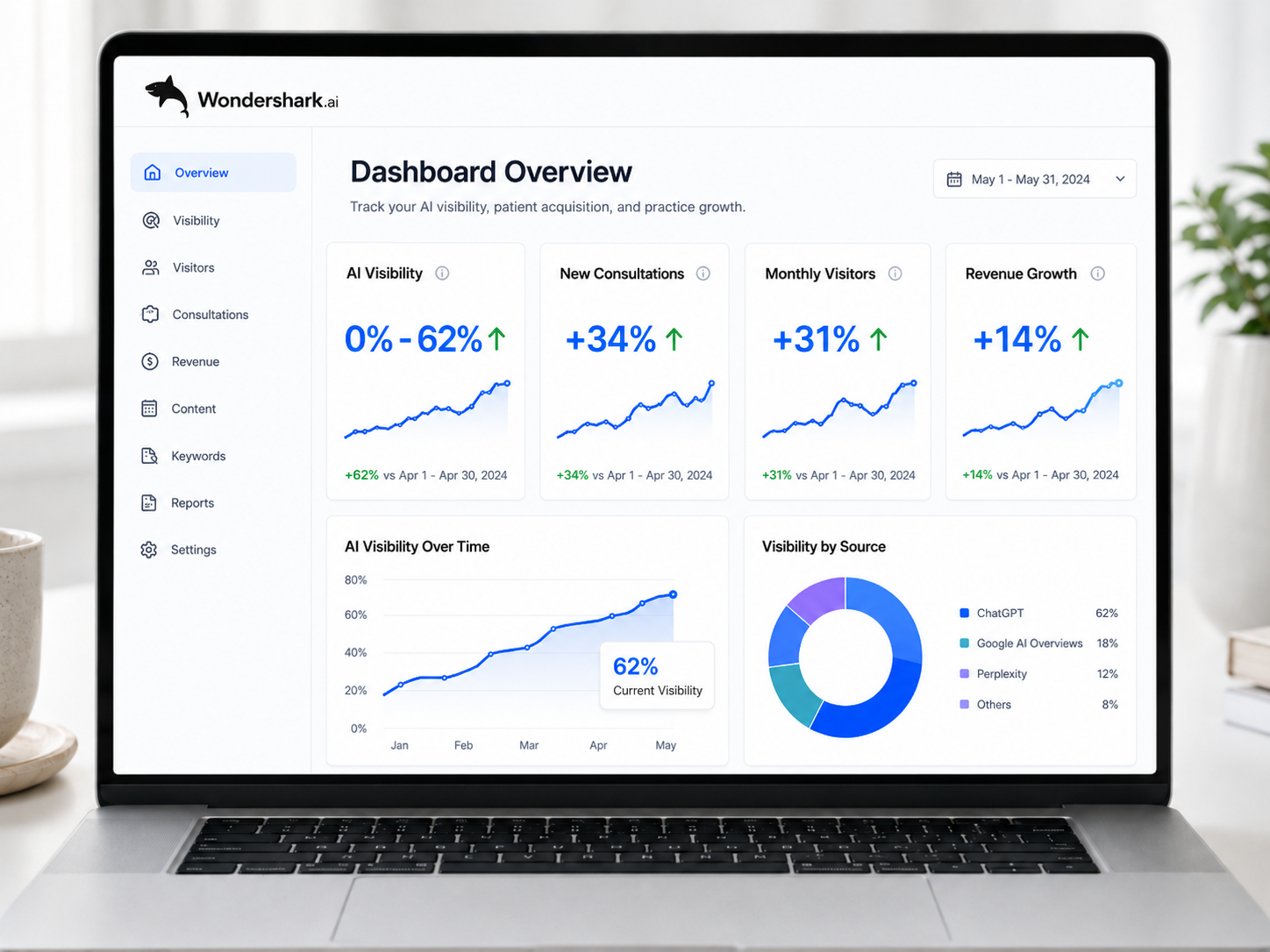
The headline number is the one that matters for a plastic surgery clinic: AI search visibility went from 0% to 62% in 90 days. The clinic went from being completely absent in AI-generated answers to appearing in nearly two thirds of relevant queries across the major platforms. That's a presence built from scratch in a channel that didn't exist for them three months earlier.
On citations, the clinic went from 3 LLM-cited discussions to 158. Those aren't abstract metrics - they are the actual discussions that ChatGPT, Perplexity, and Google AI Mode pull from when a potential patient asks about plastic surgeons in Seattle or procedure-specific questions the clinic's content now answers.
Monthly website visits grew 31%, from around 28,000 to over 36,500. Visitors arriving from AI sources stayed longer, browsed more pages, and were more likely to book a consultation. Adobe's data shows AI-referred visitors spend 48% more time on site than visitors from other channels - and this clinic's numbers matched that pattern closely. Nineteen percent of all new patient inquiries now come from AI platforms and UGC sources - a channel that contributed essentially zero before the campaign.
The business outcomes that actually matter to the practice:
- After 3 months, the clinic reached a stable increase of 5 to 10 additional patients per month, with a strong lift in higher-value procedure inquiries such as rhinoplasty, facelifts, and body contouring.
- Patient acquisition cost dropped significantly as AI-driven inquiries replaced a portion of expensive paid ad conversions.
- The clinic's overall revenue grew 14% - without increasing the Google or Meta ad budget by a single dollar.
AI Recommendations Now Rival Referrals - and Most Clinics Are Missing It
This is the part most plastic surgery practices haven't fully processed yet. For years, the hierarchy was clear: referrals from existing patients and other physicians were the gold standard, followed by reviews on Google and RealSelf, followed by paid ads. That hierarchy is shifting.The rater8 2025 report found that AI tool influence on provider choice at 26% is almost identical to primary care referrals at 28%. That means a patient asking ChatGPT for a surgeon recommendation is about as likely to act on that answer as they are on a recommendation from their own doctor. The research also found that 61% of patients said poor online reviews would stop them from visiting a clinic even if a friend recommended it. Reviews still matter - but AI recommendations have entered the same trust tier, and they're building fast.
The reason is straightforward. When a patient finds a clinic through a paid ad, they know it's an ad. They're skeptical. When a clinic shows up in an AI-generated answer to a genuine question, there's no commercial motive to discount. The AI is just answering. That's a fundamentally different kind of credibility.
For a plastic surgery clinic, where trust is the entire sale, that distinction is everything.
Why Waiting Is the Expensive Option
The honest reason most plastic surgery clinics haven't acted on this yet is that it feels early. The instinct is to keep running the channels that already work and watch how AI search develops before committing to it. That instinct makes sense on the surface. In practice, it's costing clinics real money.
Gartner projects traditional search engine volume will drop 25% by 2026 as AI answer engines absorb more queries. The clinics building AI visibility now are locking in citation authority in a channel that's still relatively open. The ones that wait will find that their competitors already own the answers patients are being served.
This is especially true in a high-research category like plastic surgery. The patient who is six weeks into researching a rhinoplasty in Seattle is seeing AI-generated answers every time they ask a question. The clinic that appears in those answers repeatedly - across procedure questions, recovery questions, cost questions, surgeon-selection questions - builds familiarity and trust long before the consultation call. That's a patient acquisition advantage that no amount of Google Ads spend can replicate.
The Bottom Line
This Seattle clinic had a great surgeon, real results, and a strong reputation. What they were missing was visibility in the place their next patients were looking - AI search. In 90 days, Wondershark.ai closed that gap, helping the clinic generate 5 to 10 additional patients per month and increase revenue by 14%. A brand new acquisition channel that compounds instead of resets every month.
If your clinic is running Google and Meta ads and wondering why patient acquisition costs keep climbing, the answer isn't to spend more on the same channels. The answer is to show up where your patients are actually looking now.
Wondershark.ai builds that visibility.
Check part 2 of this case study, the story is even more interesting.
My name is Marc Duquette, CEO of Wondershark.ai. If you're a medical practitioner watching your Google and Meta ad costs climb while new patient inquiries stay flat, I want to show you a better way. Schedule a call with me to see how an AI visibility campaign can put your clinic in front of the patients who are already searching for you - before your competitors get there first.